Overview
At a glance
Is this game right for my group?
ABG editorial scores on a 1–5 scale.
Harder to teach
High replayability
Highly interactive
Scales well
Deep strategy
How it plays
How does it play?
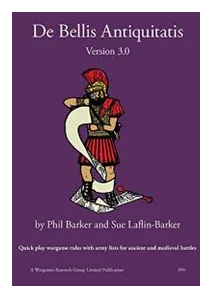
A flexible, fast-playing set of miniatures rules. An army consists of 12 units (called "elements"), classified as Blades, Warband, Knights and so forth.
Core mechanisms
Key systems that shape the decisions players make.
Action Points
Spend a limited allowance of points across several possible actions each turn.
Dice Rolling
Roll dice to introduce uncertainty into actions, production, movement, or resolution.
Line of Sight
Visibility between pieces determines valid targets, movement, or effects.
Modular Board
Build the play area from interchangeable sections that vary between games.
Measurement Movement
Measure physical distance to determine how far pieces may move.
Simulation
Model a real or imagined system through detailed cause-and-effect rules.
Read the full game description
A flexible, fast-playing set of miniatures rules. An army consists of 12 units (called "elements"), classified as Blades, Warband, Knights and so forth. The rules are very simple (and can actually fit on one sheet of paper) but nevertheless pretty effective. The Fantasy version is Hordes of the Things, and the De Bellis Multitudinis: Wargames Rules for Ancient and Medieval Battles – 3000 BC to 1500 AD rules add more detail and significantly increase army size. De Bellis Renationis extends the time period through the end of the Renaissance (1700 AD) and Horse, Foot and Guns covers the period from 1701 to 1915.