Overview
At a glance
Is this game right for my group?
ABG editorial scores on a 1–5 scale.
Harder to teach
High replayability
Highly interactive
Scales well
Deep strategy
How it plays
How does it play?
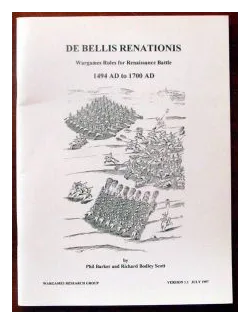
Renaissance-era rules from the DBx series (which includes De Bellis Antiquitatis: Quick Play Wargame Rules with Army Lists for Ancient and Medieval Battles, introductory rules for ancient/medieval periods; De Bellis Multitudinis: Wargames Rules for Ancient and Medieval Battles – 3000 BC to 1500 AD, an advanced version of DBA, and Hordes of the Things, a fantasy version of DBA. The rules cover the entire 200 year (plus) period from 1494 to 1700.
Core mechanisms
Key systems that shape the decisions players make.
Read the full game description
Renaissance-era rules from the DBx series (which includes De Bellis Antiquitatis: Quick Play Wargame Rules with Army Lists for Ancient and Medieval Battles, introductory rules for ancient/medieval periods; De Bellis Multitudinis: Wargames Rules for Ancient and Medieval Battles – 3000 BC to 1500 AD, an advanced version of DBA, and Hordes of the Things, a fantasy version of DBA. The rules cover the entire 200 year (plus) period from 1494 to 1700. Re-implements: De Bellis Antiquitatis: Quick Play Wargame Rules with Army Lists for Ancient and Medieval Battles De Bellis Multitudinis: Wargames Rules for Ancient and Medieval Battles – 3000 BC to 1500 AD Hordes of the Things