Overview
At a glance
Is this game right for my group?
ABG editorial scores on a 1–5 scale.
Harder to teach
High replayability
Highly interactive
Scales well
Deep strategy
How it plays
How does it play?
Linked game discovered from BGG. Full scrape pending.
Core mechanisms
Key systems that shape the decisions players make.
Area Majority
Compete to have the strongest presence in areas that award control or points.
Area Movement
Move pieces between connected regions rather than along individual spaces.
Dice Rolling
Roll dice to introduce uncertainty into actions, production, movement, or resolution.
Hidden Victory Points
Some scores remain concealed until a reveal or the end of the game.
Rising Resource Values
Resources become more valuable when players repeatedly leave them unselected.
Read the full game description
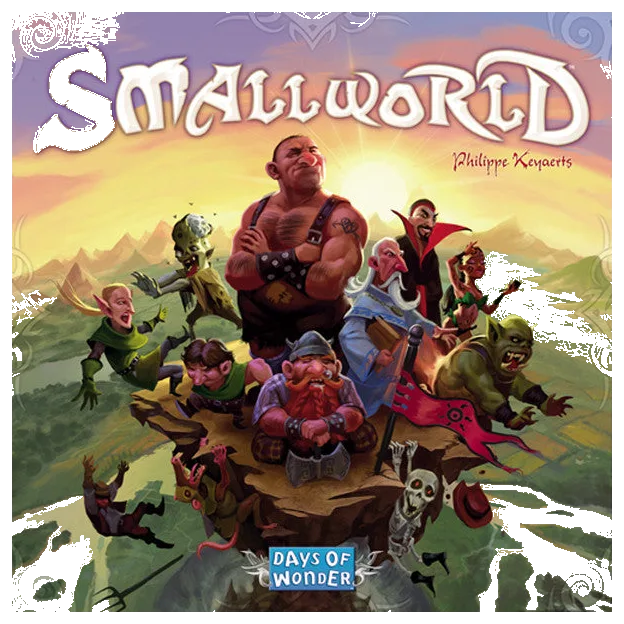
In Small World, players vie for conquest and control of a world that is simply too small to accommodate them all. Designed by Philippe Keyaerts as a fantasy follow-up to his award-winning Vinci, Small World is inhabited by a zany cast of characters such as dwarves, wizards, amazons, giants, orcs, and even humans, who use their troops to occupy territory and conquer adjacent lands in order to push the other races off the face of the earth. Picking the right combination from the 14 different fantasy races and 20 unique special powers, players rush to expand their empires - often at the expense of weaker neighbors. Yet they must also know when to push their own over-extended civilization into decline and ride a new one to victory! On each turn, you either use the multiple tiles of your chosen race (type of creatures) to occupy adjacent (normally) territories - possibly defeating weaker enemy races along the way, or you give up on your race letting it go "into decline". A race in decline is designated by flipping the tiles over to their black-and-white side. At the end of your turn, you score one point (coin) for each territory your races occupy. You may have one active race and one race in decline on the board at the same time. Your occupation total can vary depending on the special abilities of your race and the territories they occupy. After the final round, the player with the most coins wins. Clarifications: available in a pinned forum post.