Overview
At a glance
Is this game right for my group?
ABG editorial scores on a 1–5 scale.
Harder to teach
High replayability
Low interaction
Scales well
Deep strategy
How it plays
How does it play?
Linked game discovered from BGG. Full scrape pending.
Core mechanisms
Key systems that shape the decisions players make.
Area Majority
Compete to have the strongest presence in areas that award control or points.
Action Retrieval
Previously used actions must be recovered before they can be selected again.
Deck / Bag Building
Add new pieces during play to improve the cards, tokens, or dice drawn later.
Hand Management
Time and sequence a limited hand of cards to preserve future options.
Delayed Purchase
Commit to a purchase before receiving the item or paying its full cost.
Read the full game description
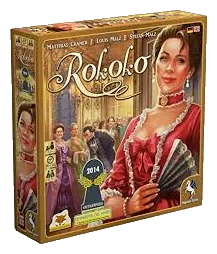
Welcome to the Rococo era during the reign of Louis XV when it’s safe to say that holding lavish balls is quite trendy. Important personalities wrap up in noble coats and dresses, anxious to outshine one another. As the biggest event is coming up in just a few weeks, everyone is turning to you with their requests: an elegant coat here, a stunning dress there, or a donation to fund the fireworks at the event. Soon you realize that it’s not just about your dressmaking business anymore — it’s about managing the most prestigious ball of the era…and now it’s time to roc(k)! Rococo is a Eurostyle board game with an interesting take on deck-building. Each turn you play one of your employee cards and let that employee perform a task: hire a new employee, buy resources, manufacture a coat or dress, or invest in the ball’s decorations. But not every employee is up to every task, so you must choose and lead your employees wisely — especially since each employee grants a unique bonus and some of these bonuses generate prestige points. After seven rounds, the game ends with the big ball and a final scoring. Then you gain prestige points for certain employee bonuses and for coats and dresses that you rent out to guests at the ball as well as for decorations that you funded. The player who collected the most prestige points wins.