Overview
At a glance
Is this game right for my group?
ABG editorial scores on a 1–5 scale.
Harder to teach
High replayability
Highly interactive
Scales well
Deep strategy
How it plays
How does it play?
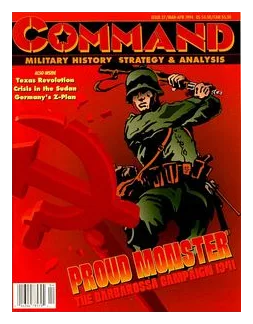
Proud Monster: The Barbarossa Campaign 1941 is a simulation of the first six months of the 1941-1945 Russo-German War. Game scale.
Core mechanisms
Key systems that shape the decisions players make.
Grid Movement
Move pieces between adjacent spaces on a regular grid.
Dice Rolling
Roll dice to introduce uncertainty into actions, production, movement, or resolution.
Hexagon Grid
Use a hexagonal map where each space connects evenly in six directions.
Simulation
Model a real or imagined system through detailed cause-and-effect rules.
Read the full game description
Proud Monster: The Barbarossa Campaign 1941 is a simulation of the first six months of the 1941-1945 Russo-German War. Game scale. Each hex on the two maps represents approximately 20 miles from side to opposite side. The units of both sides are represented primarily at the division level, but there are also a few corps, brigades, regiments and independent battalions in the counter mix. Each full game turn except the first represents two weeks. Game components [...] include rules, two 34x22" game maps, one carstock chart and table sheet, and 959 die-cut counters. (source: rulebook)