Overview
At a glance
Is this game right for my group?
ABG editorial scores on a 1–5 scale.
Harder to teach
High replayability
Highly interactive
Scales well
Deep strategy
How it plays
How does it play?
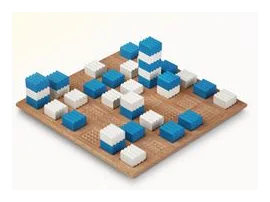
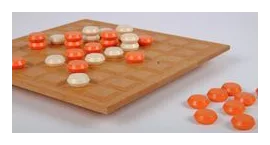
LOT is played on an orthogonal grid of 7x7 squares, with two players struggling to be first to create a line of three stacks of two pieces each in any direction (orthogonal or diagonal).
Core mechanisms
Key systems that shape the decisions players make.
Read the full game description
LOT is played on an orthogonal grid of 7x7 squares, with two players struggling to be first to create a line of three stacks of two pieces each in any direction (orthogonal or diagonal). LOT was born while researching the concept of a simple piece-removal game mechanism that made loops impossible, but at the same time, produced potentially long games in a very small playing area. (The name LOT comes from "Line Of Three" and also from "Lots Of Turns". Players alternate turns, with the second player having the option of swapping colors after the first turn (pie rule). On a turn, a player does the following in order: 1. Lays out a thing on an empty space: Place a piece of your color on an empty space of the board. 2. Looks over that: If at least one line of three or more pieces (not stacks) of your color in any direction (orthogonally or diagonally) has been created, then you must do the following in order: Choose one of the lines of three that have been created and remove two pieces, but leave one there. Add one level of tower, by adding another piece of yours to the single piece that you left in place during the previous step, thereby creating a stack. If at the end of the turn at least one line of three (or more) stacks of the same color has been created, the line's owner triumphs. If the board fills up before this happens, the game ends in a draw.