Overview
At a glance
Is this game right for my group?
ABG editorial scores on a 1–5 scale.
Harder to teach
High replayability
Highly interactive
Scales well
Deep strategy
How it plays
How does it play?
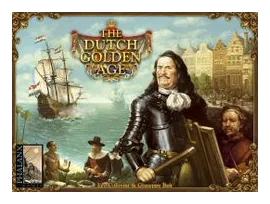
The theme of this game is economic and cultural development in the Netherlands in the 17th century. The game is played on a large game board of the Netherlands, divided into provinces.
Core mechanisms
Key systems that shape the decisions players make.
Area Majority
Compete to have the strongest presence in areas that award control or points.
Area Movement
Move pieces between connected regions rather than along individual spaces.
Auction/Bidding
Bid against other players to determine who receives an item, action, or priority.
Dice Rolling
Roll dice to introduce uncertainty into actions, production, movement, or resolution.
Movement Points
Spend a movement allowance across spaces with different costs.
Read the full game description
The theme of this game is economic and cultural development in the Netherlands in the 17th century. The game is played on a large game board of the Netherlands, divided into provinces. In addition, there are boxes for the East and the West Indies, and track round the edge of the board with the majority of spaces listing two of the ten provinces (in various combinations) that earn players varying amounts of income based on their influences in those provinces, or income spaces that earn players a flat income. The aim of the players is to be the first player to earn 33 victory points, which are acquired through earning money to extend influence in the provinces, patronize artists, invest in businesses, establish colonies in the Indies, or obtain civic advancements. These are represented by purchasing cards from one of six decks, with each deck having a special focus. Investment cards provide cash payouts, with bigger payouts for collecting sets of different values (single cards are worth less than three-card sets). Artists provide a potentially large source of victory points, but require multiple turns of patronage (i.e., cash) before they pay out. Colonization cards provide ships, captains, and cannons to outfit expeditions to establish colonies which earn victory points and access to the higher-paying spice investment card deck. Civics cards can provide governorships in the provinces (victory points and income), civic improvements (victory points), a special action that allows the holder to alter the normal rules for advancing a token on the board track. There are cards that work with some of the other decks as well, in the civics deck (e.g., investments, expedition components, etc).