Overview
At a glance
Is this game right for my group?
ABG editorial scores on a 1–5 scale.
Harder to teach
High replayability
Highly interactive
Scales well
Deep strategy
How it plays
How does it play?
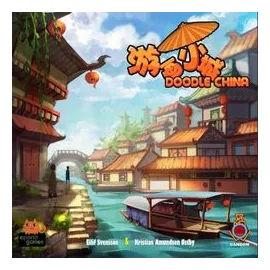
Doodle China (????) reimplements Doodle City and includes two playable cities: "Suzhou" and "Shanghai". "Suzhou" plays like Doodle City.
Core mechanisms
Key systems that shape the decisions players make.
Read the full game description
Doodle China (????) reimplements Doodle City and includes two playable cities: "Suzhou" and "Shanghai". "Suzhou" plays like Doodle City. Players draft dice that indicate where on their sheets they may draw. Players try to draw a network of canals that connect houses, parks, markets and ships. "Shanghai" uses the same basic mechanisms for dice drafting, but is played on a 6x6 grid and introduces completely new rules for scoring. One new building is the skyscraper. When activated, you either add another floor to the skyscraper, or finalize the building by drawing a road in its space. You then score 1 point per floor multiplied by the number of connected parks. When you score points, all other players must cross out this point value on their sheets, so each value can be scored by only one player throughout the game. Shanghai also has hotels, with which you score points for the length of the road passing through the hotel (as in Doodle City), but again, each value can be scored by only one player. There are no "wildcard dice" in Shanghai. Instead, when you choose dice that activate a park, you can draw in any space in that park's row; doing so costs you a tree. At game's end, players score points for having made a large network of taxis and buses.