Overview
At a glance
Is this game right for my group?
ABG editorial scores on a 1–5 scale.
Harder to teach
High replayability
Highly interactive
Scales well
Deep strategy
How it plays
How does it play?
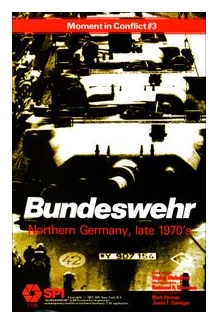
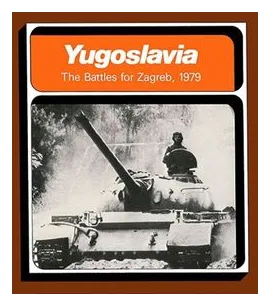
Part of SPI's Modern Battles II: Four Contemporary Conflicts series, notable for its use of untried units to simulate the uncertainty of armies that have never seen battle.
Core mechanisms
Key systems that shape the decisions players make.
Grid Movement
Move pieces between adjacent spaces on a regular grid.
Dice Rolling
Roll dice to introduce uncertainty into actions, production, movement, or resolution.
Movement Points
Spend a movement allowance across spaces with different costs.
Hexagon Grid
Use a hexagonal map where each space connects evenly in six directions.
Simulation
Model a real or imagined system through detailed cause-and-effect rules.
Read the full game description
Part of SPI's Modern Battles II: Four Contemporary Conflicts series, notable for its use of untried units to simulate the uncertainty of armies that have never seen battle. "Yugoslavia: The Battles for Zagreb, 1979" at the battalion/regimental level with hexes measuring a mile across, simulates combat in northern Yugoslavia in four scenarios.: "Civil War" between the Serbians and Croatians with NATO reinforcement; "Thrust for Zagreb", with the Soviets invading and NATO helping defense; "Relief Column", following up after a Soviet takeover of Zagreb; the three-player "Battle for Zagreb" between NATO, the Soviets and the Yugoslavs.