Overview
At a glance
Is this game right for my group?
ABG editorial scores on a 1–5 scale.
Harder to teach
High replayability
Highly interactive
Scales well
Deep strategy
How it plays
How does it play?
In his Autobiography, G.K. Chesterton mentions "the well-known and widespread national game of Gype" which he and H.G.
Core mechanisms
Key systems that shape the decisions players make.
Read the full game description
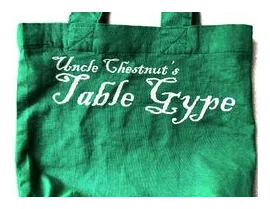
In his Autobiography, G.K. Chesterton mentions "the well-known and widespread national game of Gype" which he and H.G. Wells invented. Specifically, Chesterton mentions "I myself cut out and coloured pieces of cardboard of mysterious and significant shapes, the instruments of Table Gype; a game for the little ones." Almost 100 years later, Eternal Revolution has published Table Gype as an abstract strategy game with a random element. Players try to move their pieces from their home row to the row directly opposite. They may jump their own pieces or those of their opponents, but every jump randomizes the playing pieces that were jumped over. Uncle Chestnut's Table Gype is played with a cloth gameboard and 32 playing pieces in 4 colors. Each piece, a six-sided die, can represent any of 6 "mysterious and significant shapes" that move differently.