Overview
At a glance
Is this game right for my group?
ABG editorial scores on a 1–5 scale.
Harder to teach
High replayability
Highly interactive
Scales well
Deep strategy
How it plays
How does it play?
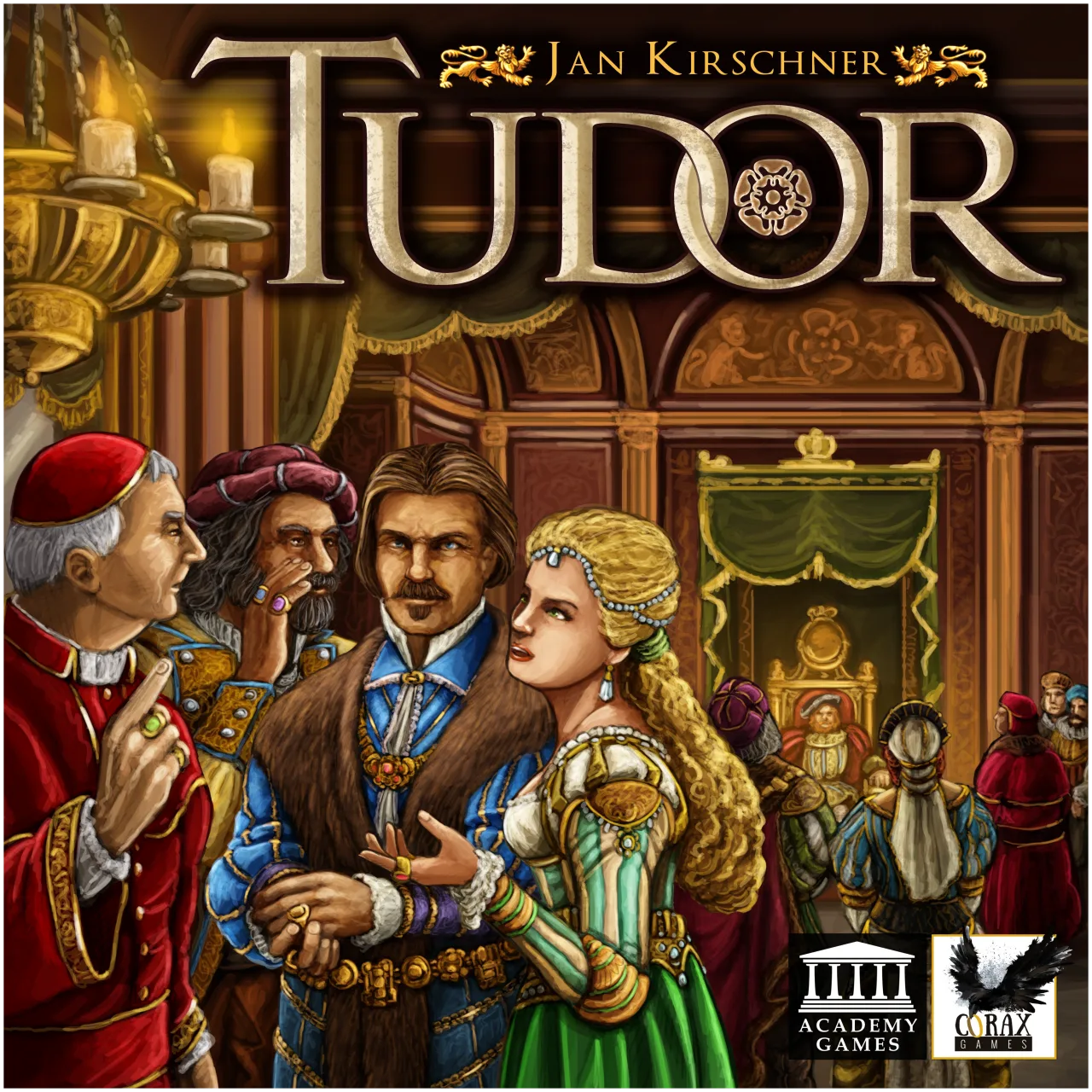
In Tudor, you are a Lord in the court of King Henry VIII. Here you will be positioning your Courtiers among the influential Lords who grant you actions that allow you to maneuver your family members to high title offices and gain their respective Rings of prestige and power.
Core mechanisms
Key systems that shape the decisions players make.
Read the full game description
In Tudor, you are a Lord in the court of King Henry VIII. Here you will be positioning your Courtiers among the influential Lords who grant you actions that allow you to maneuver your family members to high title offices and gain their respective Rings of prestige and power. Players take turns placing their Courtiers into the three Audience Chambers, each with unique actions. Then each player will place their one Lord in a Chamber of their choice. Only Courtiers in an Audience Chamber with any player's Lord present will be able to use that Chamber’s actions. But be careful, since there are only a limited number of seats available in each Chamber and competing families can push you out of a Chamber! Then all player Courtiers, in Chambers with a Lord, take turns performing ONE of the two Actions in their Chambers. The powerful Lords may also take both actions in the Chamber they occupy. Chamber Actions allow you to gain Court Cards and to move your Courtiers in the Throne Room onto spaces with square Court Tokens that represent various faction interests and demands at the court. You collect these Court Tokens, which are one way to gain Prestige at court. When you reach the top space of a Court Office in the Royal Court, you will gain that title - represented by a Ring. A player's Rings are placed and displayed on their individual Player Hand Screens. Positioning your Rings on different fingers project your interests, intent, and inclinations to the other players, because different positions enhance specific Actions that your Courtiers take in the Audience Chambers! You must always be vigilant, because another players can seize your Court Office, kicking your Office Holder out in disgrace and then taking one of YOUR Rings! The player with the most prestige at game end wins! In each game of Tudor, you will choose to play one of many scenario cards, each with their own special rules that can alter the game in dramatic ways. In addition, choose two different scoring cards to vary gameplay, creating a strategic experience with exceptional replayability. —description from the publisher