Overview
At a glance
Is this game right for my group?
ABG editorial scores on a 1–5 scale.
Harder to teach
High replayability
Highly interactive
Scales well
Deep strategy
How it plays
How does it play?
Seega is a very old game of indeterminate age, which may have been a descendent of the Roman Latrunculi and, ultimately, related to the Hnefatafl family, as the "sandwiching" method of capture is identical. Seega persists today in parts of North Africa.
Core mechanisms
Key systems that shape the decisions players make.
Read the full game description
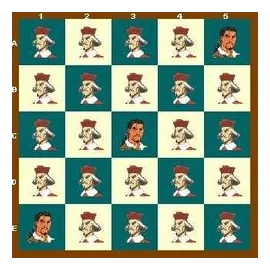
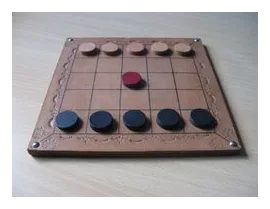
Seega is a very old game of indeterminate age, which may have been a descendent of the Roman Latrunculi and, ultimately, related to the Hnefatafl family, as the "sandwiching" method of capture is identical. Seega persists today in parts of North Africa. It is played on a 5x5 board (a "Knights" solitaire board is ideal for this) with each player having 12 pieces (usually marbles). Players alternately place two of their pieces on the board until all spaces except one are occupied. No captures are made during this deployment phase. The player who placed the last pieces then moves one piece one space orthogonally, attempting to take opponent's pieces by custodial capture (i.e. "sandwiching"). A piece on the central square - usually marked with a cross - is safe from capture. If a player cannot make a legal move, their opponent continues to play until an opening appears. To win, reduce your opponent to one piece (or none). Draws often occur. Variants are played on larger boards (8 x 8 etc.) and/or with different capturing conditions, such as jumping, as in draughts/checkers.