Overview
At a glance
Is this game right for my group?
ABG editorial scores on a 1–5 scale.
Harder to teach
High replayability
Highly interactive
Scales well
Deep strategy
How it plays
How does it play?
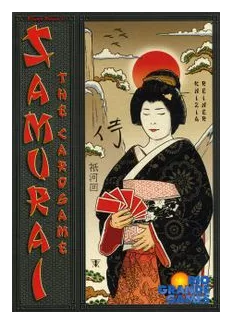
Samurai: The Card Game simulates the board game by placing village cards (actually, square tiles) to build out the "board" and then allowing each player to play one of their 5 cards from their hands, drawn from identical player decks.
Core mechanisms
Key systems that shape the decisions players make.
Enclosure
Surround spaces or pieces to claim territory, capture, or score.
Hand Management
Time and sequence a limited hand of cards to preserve future options.
Set Collection
Gather related items that become more valuable when scored together.
Highest-Lowest Scoring
Final scoring depends on balancing categories because the highest or lowest value matters.
Read the full game description
Samurai: The Card Game simulates the board game by placing village cards (actually, square tiles) to build out the "board" and then allowing each player to play one of their 5 cards from their hands, drawn from identical player decks. A village (awarding its indicated shape tokens) is scored when 4 cards surround the sides. A new village is placed when two different players cards create a location for it to be placed. The game uses "Knizia" style scoring, where having a dominating majority in a single shape category merely qualifies you for the win, but it is your total in the other two shapes which are compared for winning.