Overview
At a glance
Is this game right for my group?
ABG editorial scores on a 1–5 scale.
Harder to teach
High replayability
Highly interactive
Scales well
Deep strategy
How it plays
How does it play?
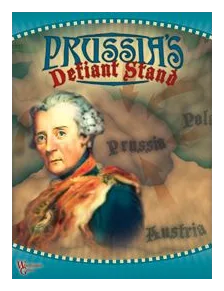
In 1756, Frederick the Great launched a preemptive strike on Saxony and his archenemy Austria, sparking the Seven Years War and pitting the most powerful countries of Europe against the fledgling state of Prussia.
Core mechanisms
Key systems that shape the decisions players make.
Dice Rolling
Roll dice to introduce uncertainty into actions, production, movement, or resolution.
Simultaneous Action Selection
Choose actions secretly or concurrently before revealing them together.
Minimap Resolution
Resolve broader movement or conflict on a smaller linked representation of the map.
Point-to-Point Movement
Move along explicit connections between named locations or nodes.
Secret Unit Deployment
Place or assign units secretly before their positions are revealed.
Read the full game description
In 1756, Frederick the Great launched a preemptive strike on Saxony and his archenemy Austria, sparking the Seven Years War and pitting the most powerful countries of Europe against the fledgling state of Prussia. Frederick's gamble nearly destroyed Prussia, but a few stunning victories over numerically superior forces, many delaying actions, British gold, and the timely death of Tsarina Elizabeth of Russia saved Prussia and ensured Frederick's place in history as a great general. Prussia's Defiant Stand recreates the fierce struggle for mastery of Central Europe. Using the well-proven, card-driven action system the game showcases the importance of maneuver, fortresses, sieges, supply, and the potentially costly option of winter campaigning. The countries of Prussia, Austria, France, Russia, and Sweden are represented with units for leaders and artillery, heavy and light infantry, cavalry, Cossacks, and fortresses. Players will have difficult choices in managing their cards as some can be used for "commands" to move units, or used to modify combat odds. The game mechanics reflect the period's focus on maneuver for position and a "Frictions of War" table beautifully models the indecisiveness of many allied leaders. This explains more than anything how the small nation of Prussia was able to withstand the combined weight of the most powerful states of the day. Frederick himself attributed Prussia's survival more to the timidity of allied commanders than to his own actions. This game is available now at www.worthingtongames.com