Overview
At a glance
Is this game right for my group?
ABG editorial scores on a 1–5 scale.
Harder to teach
High replayability
Highly interactive
Scales well
Deep strategy
How it plays
How does it play?
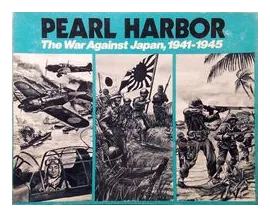
"Pearl Harbor: The War Against Japan, 1941-1945" "A board-wargame simulation of the Pacific and Asian Theaters of World War II, at the strategic level.
Core mechanisms
Key systems that shape the decisions players make.
Grid Movement
Move pieces between adjacent spaces on a regular grid.
Alliances
Players can cooperate through temporary or formal partnerships while pursuing victory.
Dice Rolling
Roll dice to introduce uncertainty into actions, production, movement, or resolution.
Movement Points
Spend a movement allowance across spaces with different costs.
Hexagon Grid
Use a hexagonal map where each space connects evenly in six directions.
Read the full game description
"Pearl Harbor: The War Against Japan, 1941-1945" "A board-wargame simulation of the Pacific and Asian Theaters of World War II, at the strategic level. Simulated are the major political, military, and economic events of the war from 1941 through 1945, as Japan fought the United States for mastery of East Asia and the Pacific. Two scenarios and a campaign game chart the course of the war."