Overview
At a glance
Is this game right for my group?
ABG editorial scores on a 1–5 scale.
Harder to teach
High replayability
Highly interactive
Scales well
Deep strategy
How it plays
How does it play?
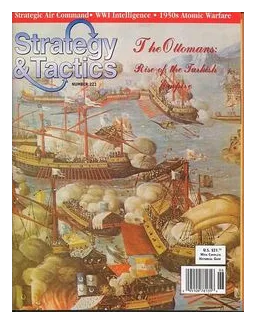
Ottomans is a historical simulation of the rise of the Ottoman Empire in the 15th and 16th centuries.
Core mechanisms
Key systems that shape the decisions players make.
Read the full game description
Ottomans is a historical simulation of the rise of the Ottoman Empire in the 15th and 16th centuries. That era saw the Ottomans go from a small nation competing for survival in the Near East to a regional superpower, forming a state that lasted until the end of the First World War. To build their empire, the Ottomans conquered the remnant of the Byzantine Empire, won smashing victories over other Islamic states and twice pushed to the gates of Vienna. There are four factions in the game, each represented by a color: the Turks (Ottomans and others), the Holy League (mainly Catholic Europeans), the Orthodox (eastern Christians), and the Caliphate (a general term for the more established Islamic states). Within each faction there are individual nations. For example, the Turks include the Ottomans and the Seljuks. Each player controls a “core nationality”; that is, one nationality within a faction of which he may never lose control. In the course of the game players may gain control of additional nationalities, some of which may be inimical to each other. Ottomans is played in a series of turns. Within each game turn, players pick stratagem markers (which allow players to take certain political and military actions), move their forces and engage in combat. A player, while representing an individual faction, may control forces from other factions. Players will find themselves sometimes attacking forces they control, while perhaps temporarily aligning themselves with an opponent, in order to reach their final goals. Throughout each game turn, players may use stratagem markers to gain military and political advantages as well as to undermine their foes. Players receive reinforcements depending on which regions they control. The objective of the game is to build the strongest empire. At the end of the game, players check to see which faction won the game. The player who contributed the most to that faction’s victory wins the game.