Table feel
Mini Shogi has a high level of direct confrontation and strategic depth. Players must frequently react to each other's strategies and turns. However, there is less emphasis on cooperation in the game.
Players
2
Time
?-?
Age
8+
Weight
3.14
Rating
7.30
Teaching signal
High replayability
Highly interactive
Scales well
Deep strategy
More strategic control
Mini Shogi has a high level of direct confrontation and strategic depth. Players must frequently react to each other's strategies and turns. However, there is less emphasis on cooperation in the game.
Mini Shogi offers a high degree of variability with its gameboard, allowing for different experiences each time it is played. The presence of expansions adds new content and gameplay elements, enhancing replay value. The game also provides deep strategic possibilities and room for players to improve their tactics over time. With good scalability and moderate easiness to learn, Mini Shogi achieves a solid replayability score of 7.85.
Mini Shogi has a low influence of luck. Random elements have minimal impact on the game outcome, and players have substantial ability to mitigate randomness through strategic decisions and planning. The game outcome is primarily determined by player strategy and decisions, with luck playing a minor role.
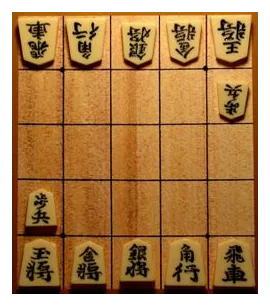
This Shogi variant was invented (or, perhaps, rediscovered) by Shigeo Kusumoto in 1970. It is played on a 5x5 board and features pieces from standard shogi (king, gold, silver, bishop, rook, pawn). Pieces promote on the final rank. It also makes use of the standard shogi drop rule. Although played on a small board, mini shogi has not been solved, and it can serve as a simple introduction to shogi.
No media imported yet.
| Edition | Year | Language | Publisher / Region |
|---|---|---|---|
| No editions imported yet. | |||
No files imported yet.
No commerce mappings imported yet.
No linked items imported yet.