Table feel
Chu Shogi has a high level of direct confrontation and strategic depth. Players frequently need to pay attention to each other's actions, but there is less emphasis on cooperation.
Teaching signal
High replayability
Highly interactive
Scales well
Deep strategy
More strategic control
Chu Shogi has a high level of direct confrontation and strategic depth. Players frequently need to pay attention to each other's actions, but there is less emphasis on cooperation.
Chu Shogi offers a high level of variability with its gameboard and expansions, allowing for different experiences each time it is played. The game provides deep strategic possibilities and encourages players to improve their tactics over time. It scales well with different numbers of players and offers a moderate level of ease in learning. Overall, Chu Shogi has a strong replayability score of 7.9.
Chu Shogi has a relatively low influence of luck. While there are some random elements in the game, such as dice rolls for combat, they do not predominantly determine the outcome. Players have substantial ability to mitigate randomness through strategic decisions and planning. The game outcome is primarily determined by player strategy and decisions, with luck playing a minor role.
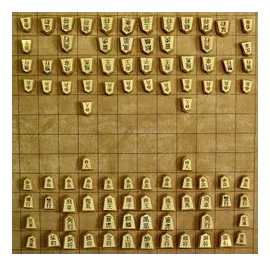
Chu Shogi is a Japanese cousin of FIDE Chess and ancestor of Modern Shogi. Each player controls 46 pieces, and play is on a 12×12 board. The object is to capture your opponent's King (and Crown Prince, if they have promoted their Drunk Elephant). Unlike Modern Shogi, this game is played without drops. The game is much larger than Chess and Shogi. The pieces consist of such interesting pieces as the Drunk Elephant, Phoenix, Kylin, Free Boar, Flying Ox, and many other colorfully-named pieces including the incredibly powerful Lion.
No media imported yet.
| Edition | Year | Language | Publisher / Region |
|---|---|---|---|
| No editions imported yet. | |||
No files imported yet.
No commerce mappings imported yet.
No linked items imported yet.