Overview
At a glance
Is this game right for my group?
ABG editorial scores on a 1–5 scale.
Harder to teach
High replayability
Highly interactive
Scales well
Deep strategy
How it plays
How does it play?
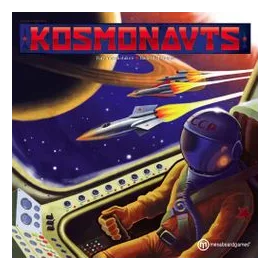
In Kosmonauts, players take on the role of space cadets who need to complete one final challenge before they can become officers of the Space Forces. The challenge?
Core mechanisms
Key systems that shape the decisions players make.
Read the full game description
In Kosmonauts, players take on the role of space cadets who need to complete one final challenge before they can become officers of the Space Forces. The challenge? A race through space during which they demonstrate their spaceship-controlling skills and problem-solving abilities. This race is not linear, and spaceships can pass checkpoints on the planets and comet in any order. Once a ship lands, the player claims the appropriate planet/comet token; the earlier you arrive, the more victory points (VPs) that token is worth. Each game turn is divided into four phases: Events: The active player chooses one of three available events, which then affects all players. Events won't necessarily affect everyone the same way, though, depending on where they are in space and what they're doing. Orders: All players present their movement orders simultaneously using a direction rose with six possible directions. Each turn, a player can place up to three units of fuel in any of those six directions. Flying: Each ship flies one cell for each unit of fuel spent on movement in a particular direction; if a player fueled multiple directions, the ship moves in all directions fueled. Fuel units are not removed after each turn – there's no friction in space, right? – so each turn allows a captain to further increase speed (by adding fuel to units already in place) or slow down his ship (by accelerating in the opposite direction). Planet Movement: The active player moves all planets, then passes the active player token to the player on his right. The game ends when someone returns to Earth after visiting all but one planet. Players receive VPs for their landing tokens and completed missions, and whoever has the most VPs wins!