Overview
At a glance
Is this game right for my group?
ABG editorial scores on a 1–5 scale.
Harder to teach
High replayability
Highly interactive
Scales well
Deep strategy
How it plays
How does it play?
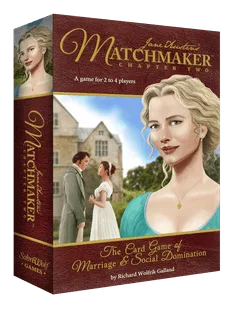
In Jane Austen's Matchmaker, a card game for 3 to 6 players, you place your Ladies into Society and propose to other players' Ladies with your Gentlemen.
Core mechanisms
Key systems that shape the decisions players make.
Read the full game description
In Jane Austen's Matchmaker, a card game for 3 to 6 players, you place your Ladies into Society and propose to other players' Ladies with your Gentlemen. Some proposals lead to love and happiness and some to financial prosperity, but some are nothing more than shallow seductions. Whatever happens, you must ensure that your characters come out on top! When proposing, if a Gentleman's Charm is lower than the Lady's, he must discard cards to make up the difference. If he wants to really impress her, he can discard additional cards to boost his Charm. If the Lady accepts, the players exchange characters and whoever has the higher Wealth draws cards equal to the difference. If she declines - paying cards if necessary to counter his Charm offensive - the Gentleman returns to the player's hand to brush up on his manners. Declining a proposal from a Gentleman with a higher Rank will earn you additional cards, and if you have more Ladies in Society than anyone else at the start of your turn, you get an extra 'go'. This can help you to dominate the matchmaking scene but will doubtless draw the ire of your rivals. It's good to be protective of your Ladies, but don't let them get left on the shelf... When the deck runs out, the game ends and players tally up the Virtue of their married characters, then subtract the Virtue of their 'old maids' (Ladies left unwed in Society). Whoever has the highest Virtue total wins!