Overview
At a glance
Is this game right for my group?
ABG editorial scores on a 1–5 scale.
Harder to teach
High replayability
Highly interactive
Scales well
Deep strategy
How it plays
How does it play?
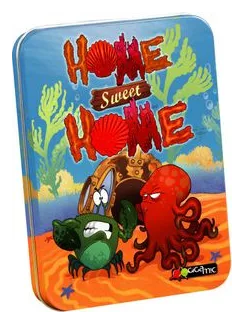
In Home Sweet Home, players have five diving bells and want to get as many sea creatures into them as possible – but crabs don't like octopi and vice versa, so keep those two species separate if you don't want trouble.
Core mechanisms
Key systems that shape the decisions players make.
Read the full game description
In Home Sweet Home, players have five diving bells and want to get as many sea creatures into them as possible – but crabs don't like octopi and vice versa, so keep those two species separate if you don't want trouble. To set up the game, each player lays out diving bell cards in front of them, numbered 1-5, and receives four cards from the shuffled animal deck; crab and octopus cards are also numbered 1-5. At the start of a round, a player lays an animal card from her hand in the center of the table and states the sum of all cards played. The next player does the same, making sure that all animal cards are visible. This continues until the sum of the animals played totals twelve or more. The player who laid the last card takes the stack, then places the animals in her diving bells based on the number on the cards. If you would lay a crab in a diving bell that already holds one or more octopi cards (and vice versa), you must discard one card of each type. Once the deck rounds out, players finish the round, if possible, then sum the animals in their diving bells. The player with the highest total wins!