Overview
At a glance
Is this game right for my group?
ABG editorial scores on a 1–5 scale.
Harder to teach
High replayability
Highly interactive
Scales well
Deep strategy
How it plays
How does it play?
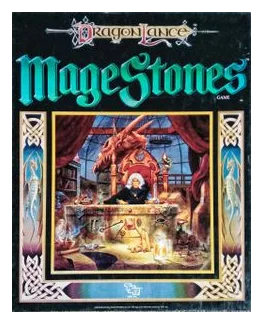
Very vaguely themed to the AD&D Dragonlance campaign background. The board is a grid 7 x 9, with columns numbered 3-9, columns representing planes of reality, rows representing schools of magic, though this has no effect on gameplay.
Core mechanisms
Key systems that shape the decisions players make.
Read the full game description
Very vaguely themed to the AD&D Dragonlance campaign background. The board is a grid 7 x 9, with columns numbered 3-9, columns representing planes of reality, rows representing schools of magic, though this has no effect on gameplay. The board "wraps" top to bottom, but not for the purposes of diagonal capture. Players roll 3d3 (six sided dice numbered 1-3 twice), and place their coloured tokens on a space in the column matching the dice total. The exception to this is where the three dice are all different, where the player misses a turn "distracted by events in the prime material plane." When a player rolls all three dice the same, they get another turn after placing their stone. Capture of opposition stones is in the style of Othello/Reversi, but captured stones are removed from the board and returned to their owner. First player to place all their stones wins. Re-implemented by: Let's Do Lunch!