Overview
At a glance
Is this game right for my group?
ABG editorial scores on a 1–5 scale.
Harder to teach
High replayability
Highly interactive
Scales well
Deep strategy
How it plays
How does it play?
In the golden age of Islam, many Scholars arise and amaze all in the land with their inventions and discoveries.
Core mechanisms
Key systems that shape the decisions players make.
Open Drafting
Select cards or items from a shared face-up display.
Push Your Luck
Choose whether to secure current gains or risk them for a larger reward.
Team-Based Game
Players compete in fixed teams and coordinate toward a shared team result.
Variable Player Powers
Each player has different abilities, restrictions, or strategic advantages.
End Game Bonuses
Earn additional points for meeting conditions evaluated when the game ends.
Read the full game description
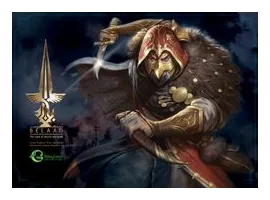
In the golden age of Islam, many Scholars arise and amaze all in the land with their inventions and discoveries. Meanwhile The Kingdom who has just discovered the power of knowledge, starts to intrigue these Scholars in order to strengthen the monarchy and profit more from ruling the land. But The People who notice the intentions of the Sultan and his subjects, confront The Kingdom and struggle to help these Scholars. In the midst of the dispute between The People and The Kingdom, a sect called The Hashashin (The Assassins) has risen. They believe that power is the root of all corruption and must be destroyed. Therefore, The Hashashin are lead to killing these Scholars. Belaad: The Land of Swords and Quills is an engine-building thematic card game for 2 to 6 players. Players are split up in three teams and over the course of the game, attempt to triumph over the other two. The Hashashin come in play if there are an odd number of players in which a single player controls the team. Every team consists of a unique set of characters with special abilities and is as follows; The Kingdom: Sultan, Vizier, Treasurer, Sheriff, Commander. The People: Bahlool, Preacher, The Trustworthy, Altruist, Folk Hero. The Hashashin: Sect Leader, Hashash, Spy, Assassin. The Kingdom and The People follow the same goal of hiring the most Scholars while The Hashashin mean to kill them. Every Scholar provides a number of scientific symbols for teams which count as victory points at the game's end. The game proceed by playing action cards. Each player has four cards in hand and plays a card by turn, using the action on the card, and after that draws another card from one of the three decks. Action cards help each player strengthen their team's characters, gain coins or steal coins from other teams, declare war and hire Scholars. Every character has a certain symbol, other than their special abilities, and can be strengthened by placing tokens on said character's mat. For example, the Treasurer provides more coins, the Commander becomes more powerful in war, the Sultan gains more influence in hiring Scholars and etc. Victory points are gained by two means; scientific points provided by Scholars, and military points gained from war. The game is played in 4 eras in which different Scholars emerge and at the end of the 4th era, the team with most victory points prevails. —description from the publisher