Overview
At a glance
Is this game right for my group?
ABG editorial scores on a 1–5 scale.
Harder to teach
High replayability
Highly interactive
Scales well
Deep strategy
How it plays
How does it play?
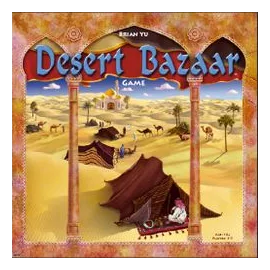
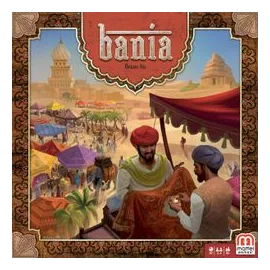
In a formidable Indian landscape, a burgeoning marketplace is forming. Opportunities are ripe in this community of traders, bankers, moneylenders, and dealers of grains and spices.
Core mechanisms
Key systems that shape the decisions players make.
Read the full game description
In a formidable Indian landscape, a burgeoning marketplace is forming. Opportunities are ripe in this community of traders, bankers, moneylenders, and dealers of grains and spices. Fortune awaits the one who plans well and uses his resources wisely. Oil, silk, incense and spices are the currency used to build tents, establish settlements, and amass riches — but commerce brings competition, and the space to build is limited. When there is no more room, the player who has maximized his resources to become the most successful merchant is the victor! In Bania, players use resource cards to buy and build tents, then strategically place these tents on the board to earn points. When no legal moves remain on the board, the game ends and the player with the most points wins. On a turn, a player performs these actions in order, if possible: Collect your bonus: If your elephant marker sits on a tent tile on the board, collect one resource card of each type in the settlement where the marker is located. Buy and place tent tiles OR roll for resources: As explained below. Place your elephant marker: If your elephant marker isn't on the board and you placed tent tiles that turn, place the marker on one tile you placed this turn. Each player starts the game with four tent tiles and eight resource cards: two of each type (oil, spice, silk and incense); one side of the tent tiles shows one of these four resources, while the other side shows three resource symbols (e.g., two spice and one silk). If you want more resources, you can roll the four dice up to three times, locking any dice that you wish while doing so. When you stop rolling, you receive one resource card for each resource symbol showing; in addition, if you have both a front and back half of an elephant showing on the dice, then you receive an elephant marker bonus as at the start of your turn. If you have the right cards in hand, you might instead choose to buy and place tents; if you have twelve or more cards, then you must do so. A tent costs three resource cards matching the three resource symbols on the back and you pay this cost after placing a tent on the game board, but if you place a tent adjacent to other tents, then the cost is discounted based on the colors of adjacent tents, possibly allowing you to place a tent for no cost at all! When you place a tent on its own to start a settlement, you receive 3 points; for all other tents placed, you receive 1 point each. You refill your hand to four tent tiles at the end of your turn — but if you've placed all four, you can immediately draw four new tiles and keep building! A settlement can have at most seven tents in it; when someone places the seventh tent, any elephant markers in the settlement are removed and returned to their owners. The game ends when no more tents can be placed. Whoever placed the final tile scores 3 points, and whoever has the most of each type of resource card scores 2 points. The player with the most points wins.