Overview
At a glance
Is this game right for my group?
ABG editorial scores on a 1–5 scale.
Harder to teach
High replayability
Highly interactive
Scales well
Deep strategy
How it plays
How does it play?
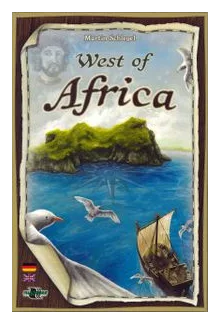
In the late Middle Ages, the Canary Islands had faded into obscurity from a European point of view. There was neither gold nor silver, and the islands did not play a role as a trading post because the north-south trade of that time went through the Sahara.
Core mechanisms
Key systems that shape the decisions players make.
Area Majority
Compete to have the strongest presence in areas that award control or points.
Pick Up and Deliver
Collect goods at one location and transport them to another for rewards.
Simultaneous Action Selection
Choose actions secretly or concurrently before revealing them together.
Point-to-Point Movement
Move along explicit connections between named locations or nodes.
Read the full game description
In the late Middle Ages, the Canary Islands had faded into obscurity from a European point of view. There was neither gold nor silver, and the islands did not play a role as a trading post because the north-south trade of that time went through the Sahara. In 1312, the Genoese merchant and seafarer Lancelotto Malocello effectively "rediscovered" the Canary Islands. During the 15th century, the archipelago was conquered by the Spanish. Spanish masters pushed agriculture, cultivating sugar cane, wine and grain, which quickly gave the islands a certain economic value and importance. In West of Africa, the players cultivate goods, try to sell them profitably, and build settlements. Each player has their own deck of cards. Each turn the players select cards from their decks to conduct successful actions, always keeping the actions of the other players in mind.