Overview
At a glance
Is this game right for my group?
ABG editorial scores on a 1–5 scale.
Harder to teach
High replayability
Highly interactive
Scales well
Deep strategy
How it plays
How does it play?
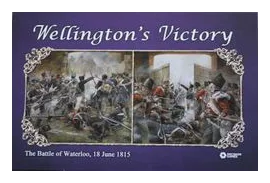
The classic SPI game covering the battle of Waterloo returns in this redesigned version.
Core mechanisms
Key systems that shape the decisions players make.
Read the full game description
The classic SPI game covering the battle of Waterloo returns in this redesigned version. Napoleon's French Army of the North faces Wellington's hodge-podge Army of the Low Countries, who are fighting for time while awaiting the arrival of Blucher's Prussian Army of the Lower Rhine. The maps use natural contours to show elevations, withterrain features including the critical chateaux, villages and farms, walls, woods, hedges, sunken roads, slopes, streams, and marshes. Most of the vividly colored counters represent combat units: infantry battalions, cavalry squadrons, artillery batteries, and engineer detachments. Many battalions have additional counters for specialist skirmishers, or additional counters to represent greater size. Unit capabilities are modified by a number of formation markers, from infantry squares to cavalry vedettes. Individual leaders enhance unit performance, while each army's high command is represented by key commanders and unit headquarters. The game mechanics have been streamlined; a single dice roll inflicts casualties and disorder. Units and larger organizations wear down over time and must be rested or risk a catastrophic collapse. Finesse trumps brute strength in combat; players must utilize a variety of arms, formations, and tactics to seize key ground and destroy enemy units. Hidden movement allows each player to prepare surprises for the other. Multiple scenarios cover everything from the historical battle to a fight for an individual chateau. The French player may decide on an early start, or even on turning the battle into a demonstration. The Prussian arrival can occur early with fewer troops, or later with more, at the will of the allied player. It's all here, from massive cavalry charges to grand bombardments to skirmishing to wild melees, with the fate of Europe in the balance. Game Components: 1 32-page Color Rules Book 1 16-page Color Battle Analysis & OB (extract from S&T #292) 7 Counter Sheets (1,960 die-cut counters) 4 34" x 22" soft maps 2 Player Aid Sheets 1 Time Display Sheet 3 Army Display Sheets 1 Prussian Off-Board Approach Sheet 6 6-Sided Large Dice Storage Bags