Overview
At a glance
Is this game right for my group?
ABG editorial scores on a 1–5 scale.
Harder to teach
High replayability
Highly interactive
Scales well
Deep strategy
How it plays
How does it play?
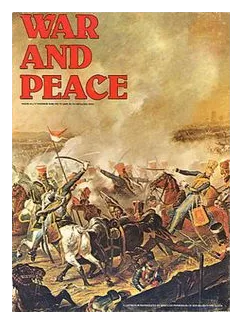
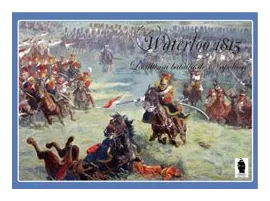
Waterloo 1815: Napoleon's last battle is a game that recreates the decisive encounter fought between the French army and the Anglo-allied and Prussian coalition on June 18th, 1815. The wooden pieces represent the actual units that fought the battle.
Core mechanisms
Key systems that shape the decisions players make.
Scenario Campaign
Play linked or standalone scenarios with their own setup, objectives, and consequences.
Dice Rolling
Roll dice to introduce uncertainty into actions, production, movement, or resolution.
Measurement Movement
Measure physical distance to determine how far pieces may move.
Simulation
Model a real or imagined system through detailed cause-and-effect rules.
Read the full game description
Waterloo 1815: Napoleon's last battle is a game that recreates the decisive encounter fought between the French army and the Anglo-allied and Prussian coalition on June 18th, 1815. The wooden pieces represent the actual units that fought the battle. They come in different sizes, making it easy to tell infantry from cavalry from artillery. Infantry and cavalry units are brigades, while artillery ones are batteries. There are unit cards that provide combat and movement values for each specific unit type. Each unit displays the following information: - Corps designation. - Brigade designation. - Commander's name. - Morale. The game is played in turns, composed of two player turns. Each player's turn consists of the following phases: - Reorganization. - Artillery Defensive Fire. - Artillery Offensive Fire. - Movement. - Defender Fire. - Attacker Fire. - Combat. Optional event cards can be used to add historical variants and uncertainty to the game. Victory is determined at the conclusion of the last turn, with players getting victory points for securing important locations, eliminating enemy units or killing Napoleon or Wellington. In the latest editions the game does not contain wooden blocks or event cards (the latter come as markers). The wooden blocks can be obtained as an option in the web shop. The Collector's edition introduced solo mode. If you have those rules, you can play solo with previous versions as it did not introduce new components.