Overview
At a glance
Is this game right for my group?
ABG editorial scores on a 1–5 scale.
Harder to teach
High replayability
Highly interactive
Scales well
Deep strategy
How it plays
How does it play?
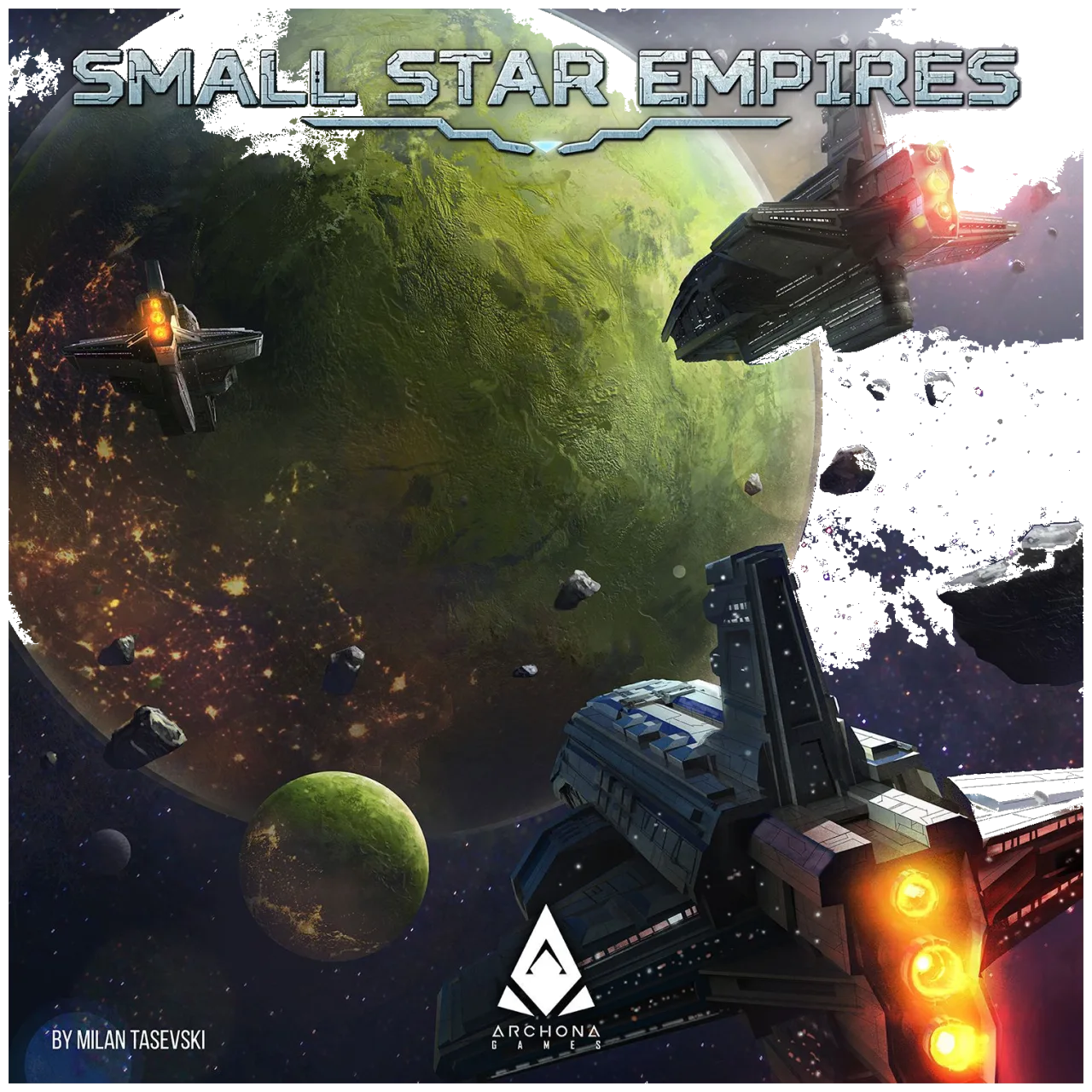
Small Star Empires is a quick area control game for 2-4 players. In this game, players colonize the galaxy using their ships, which they move on a modular board containing hexagonal spaces (systems).
Core mechanisms
Key systems that shape the decisions players make.
Area Majority
Compete to have the strongest presence in areas that award control or points.
Enclosure
Surround spaces or pieces to claim territory, capture, or score.
Grid Movement
Move pieces between adjacent spaces on a regular grid.
Modular Board
Build the play area from interchangeable sections that vary between games.
Hexagon Grid
Use a hexagonal map where each space connects evenly in six directions.
Read the full game description
Small Star Empires is a quick area control game for 2-4 players. In this game, players colonize the galaxy using their ships, which they move on a modular board containing hexagonal spaces (systems). The modular board is made up of seven different double-sided sector tiles, which allows for a different map and different experience each time you play the game. During a turn, a player must move one of their ships on the board. They can move the ship only in a straight line, as far away as they want, but they cannot go over systems controlled by other players. After moving the ship, the player has to choose whether to place a colony or a trade station in that system. Both of these mark control over the system until the end of the game, but the trade station gives the player bonus points for each adjacent system controlled by their opponents. The game ends when either all of the players have placed their colonies and trade stations on the board or until none of the players' ships can move (because they have become blocked by other players' systems). After the game ends, points are calculated. Each player gets one point for each planet that they have in their systems. (Systems have 1 to 3 planets on the board.) Players also earn points for Nebulae; the more they have from one color, the more points they earn, with bonus points from other special systems such as the Unexplored System Tiles, which are part of a variant in the game. After calculating the points, the player with the most points wins!