Overview
At a glance
Is this game right for my group?
ABG editorial scores on a 1–5 scale.
Harder to teach
High replayability
Highly interactive
Scales well
Deep strategy
How it plays
How does it play?
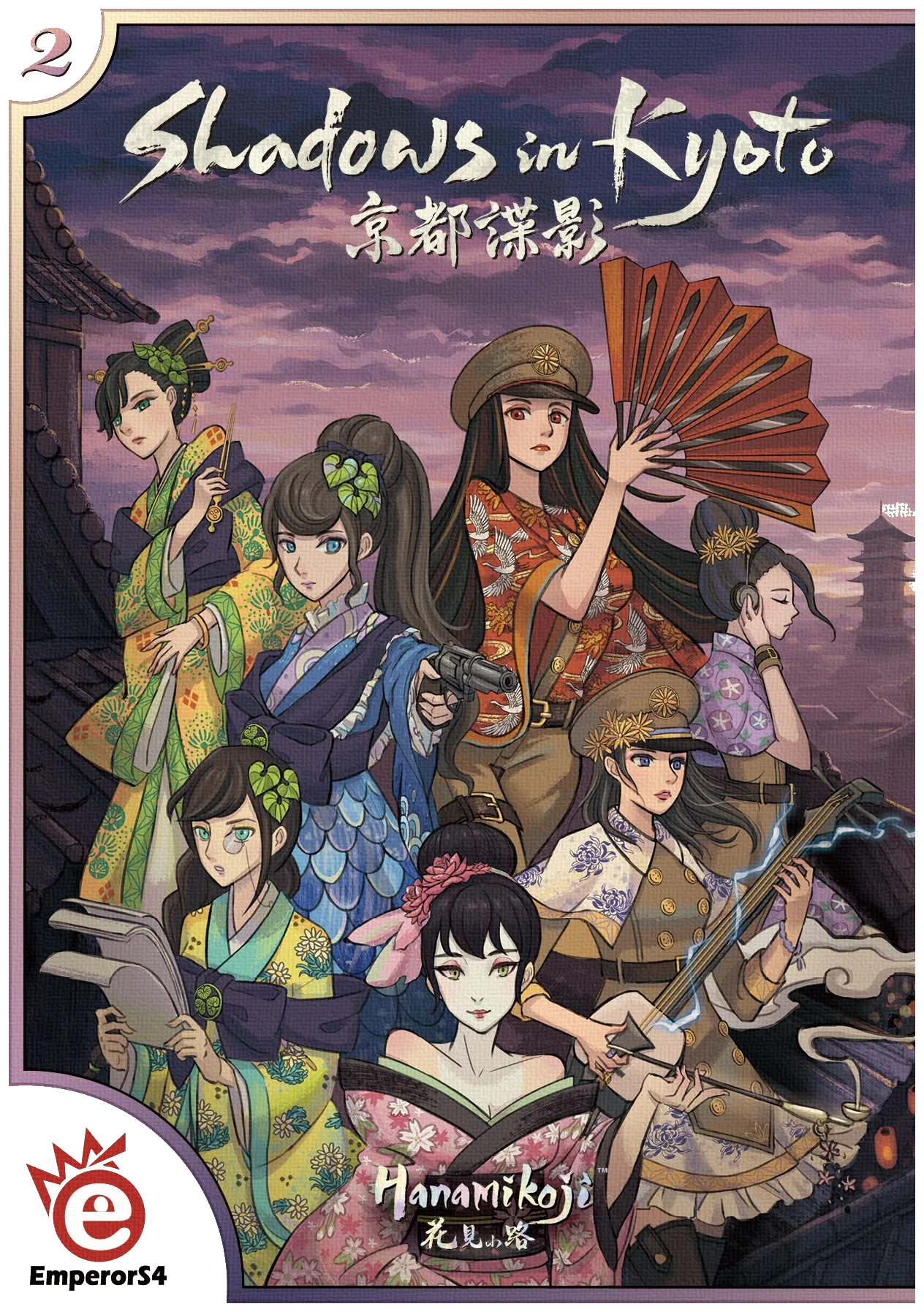
Shadows in Kyoto is a two-player abstract game based with the background of Hanamikoji in which players take control of the Oniwaban, a group of undercover spies, secretly protecting the Shogun, or an intelligence agency of the Meiji Government, funding with the advanced technology of the Western Industrial Revolution. As the commanders, the players must secretly gather key intelligence from the opponent while protecting their own interests.
Core mechanisms
Key systems that shape the decisions players make.
Grid Movement
Move pieces between adjacent spaces on a regular grid.
Hand Management
Time and sequence a limited hand of cards to preserve future options.
Secret Unit Deployment
Place or assign units secretly before their positions are revealed.
Variable Player Powers
Each player has different abilities, restrictions, or strategic advantages.
Read the full game description
Shadows in Kyoto is a two-player abstract game based with the background of Hanamikoji in which players take control of the Oniwaban, a group of undercover spies, secretly protecting the Shogun, or an intelligence agency of the Meiji Government, funding with the advanced technology of the Western Industrial Revolution. As the commanders, the players must secretly gather key intelligence from the opponent while protecting their own interests. Through movements, conflicts, and tactics, players have three different paths to victory: 1). Capture 2 enemy agents who possess real intelligence. 2). Let your opponent captures 3 agents of your own who possess fake intelligence. 3). Succeed in the escape of 1 agent of your own who possesses real intelligence.