Overview
At a glance
Is this game right for my group?
ABG editorial scores on a 1–5 scale.
Harder to teach
High replayability
Highly interactive
Scales well
Deep strategy
How it plays
How does it play?
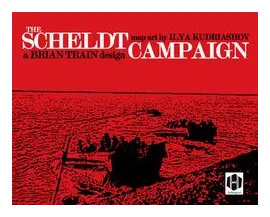
An operational level wargame of operations in the area of the Scheldt Estuary in Belgium and Holland in October and November of 1944.
Core mechanisms
Key systems that shape the decisions players make.
Read the full game description
An operational level wargame of operations in the area of the Scheldt Estuary in Belgium and Holland in October and November of 1944. The crucially important port city of Antwerp had fallen to a rapid British advance in September, but the port could not be used until the coastal artillery defences at the mouth of the Scheldt had been neutralized and the river swept of thousands of mines. It fell to the First Canadian Army, already tired and overstretched after being in continuous combat since the D-Day invasion, to do this. The nature of this campaign poses challenges to the players: the grinding, attritional nature of the fighting; the difficulty of the terrain fought over; and the limited resources available to either side. The Staff Card system, adapted from Joe Miranda's "Bulge 20" system, does not allow players to move and fight every unit every turn, as is often the case in other wargames - they must choose what they want to do, and where, and how to support it. The combat system, seemingly very simple because it does not rely on odds computations or column shifts, favours the defence and reflects the incremental nature of unit losses as they wear away in the fighting.