Overview
At a glance
Is this game right for my group?
ABG editorial scores on a 1–5 scale.
Harder to teach
High replayability
Highly interactive
Scales well
Deep strategy
How it plays
How does it play?
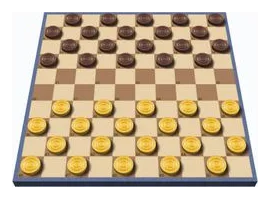
Two players sit opposite a 10×10 checkered board with a light square in the lower right. Each player has 15 unique pieces in his own color, arranged on the dark squares of the nearest three ranks.
Core mechanisms
Key systems that shape the decisions players make.
Read the full game description
Two players sit opposite a 10×10 checkered board with a light square in the lower right. Each player has 15 unique pieces in his own color, arranged on the dark squares of the nearest three ranks. From left to right, the pieces are one through five stars (first rank), moons (second rank) and suns (third rank). The pieces move one square diagonally in any direction to a vacant square, or must leap over one opposing piece (only opposing pieces, but without capture - there are no captures in Salta) if the square immediately beyond is vacant. Only one jump is made (no chain jumping), and missed opportunities to jump may be forced by the opponent, although a player is free to choose among several available jumps. Blockading all of the opposing pieces is not allowed, although some may be temporarily blocked as long as the opponent still has a legal move. The goal is to be the first player to move all of his pieces seven rows ahead - i.e. into the starting places of the opposing piece. However, the order from left to right and front to back should be kept. Thus, reading from left to right, the goal position is one through five suns (tenth rank), one through five moons (ninth rank) and one through five stars (eighth rank). The player first achieving this position wins by as many points as the number of moves opponent would need to achieve his goal position. If neither player reaches the goal position by the time 120 moves have been made by each player, the score is calculated as the difference between the number of moves each player would need to reach the goal position, as if the board were clear of opposing pieces.