Overview
At a glance
Is this game right for my group?
ABG editorial scores on a 1–5 scale.
Harder to teach
High replayability
Highly interactive
Scales well
Deep strategy
How it plays
How does it play?
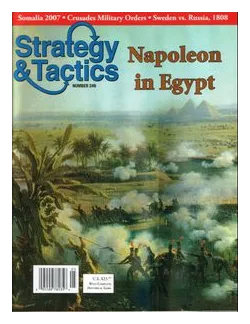
One of two games published as part of Strategy & Tactics magazine #249 – Forgotten Napoleonic Campaigns: The Egyptian Campaign & The Russo-Swedish War Forgotten Napoleonic Campaigns (FNC) uses a single operational-level system to examine two of the more obscure, though nonetheless interesting, campaigns fought during the Napoleonic Wars. The Russo-Swedish War (RSW), covers the 1808 invasion of Finland.
Core mechanisms
Key systems that shape the decisions players make.
Read the full game description
One of two games published as part of Strategy & Tactics magazine #249 – Forgotten Napoleonic Campaigns: The Egyptian Campaign & The Russo-Swedish War Forgotten Napoleonic Campaigns (FNC) uses a single operational-level system to examine two of the more obscure, though nonetheless interesting, campaigns fought during the Napoleonic Wars. The Russo-Swedish War (RSW), covers the 1808 invasion of Finland. The game is a two-player contests of low-to-intermediate complexity, meaning experienced players can master the rules and finish a match in one session of three to five hours. Each hex represents 12.4 miles (20 kilometers) from side to opposite side. Each game turn generally represents one calendar month. Winter turns each represent two months. The individual units of maneuver represent brigades, regiments and battalions, formations varying in size from a few hundred to a few thousand men. Naval power is represented abstractly with markers used to denote the firepower of whole fleets or flotillas.