Overview
At a glance
Is this game right for my group?
ABG editorial scores on a 1–5 scale.
Harder to teach
High replayability
Highly interactive
Scales well
Deep strategy
How it plays
How does it play?
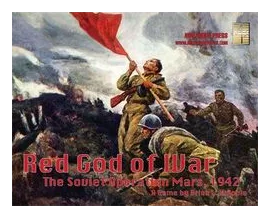
By the winter of 1942, the Red Army of Workers and Peasants had contained the German attacks of the previous summer and fall. Now came the time for a whole series of counter-offensive of its own, designed to cut off and destroy the weakened Nazi armies.
Core mechanisms
Key systems that shape the decisions players make.
Read the full game description
By the winter of 1942, the Red Army of Workers and Peasants had contained the German attacks of the previous summer and fall. Now came the time for a whole series of counter-offensive of its own, designed to cut off and destroy the weakened Nazi armies. The northernmost of these would be Operation "Mars", aimed at the German Ninth Army around the city of Rzhev, west of Moscow in the winter of 1942. The Soviet plan, the work of the brilliant Marshal Georgi Zhukov, called for smashing the already-weakened Germans with a heavy commitment of tanks and fresh troops. When this first objective had been reached, a second operation, code-named Jupiter, would encircle and destroy the German 3rd Panzer Army to the south. Despite horrible weather and very rough forested terrain, the initial Soviet attacks went very well. But German resistance stiffened, and as the Red Army failed to make further progress Zhukov reacted by committing more and more men and tanks. Suicidal courage only added to the Soviet casualty lists, and by the time the offensive sputtered to a halt Soviet losses topped 335,000 men and 1,600 tanks. Little known thanks to Soviet government silence for 50 years, the offensive was designed as a companion to the "Saturn" offensive around Stalingrad. The fact that the offensive was repulsed with heavy losses meant it was not discussed in Soviet accounts of the Great Patriotic War. While the offensive failed to accomplish what the Soviet High Command and General Georgi Zhukov wished, it did provide what the Soviets needed most, a means of keeping German forces of Army Group Center in place while the Saturn offensive in the south ran its course. Red God of War covers Operation Mars using the same game system as Alsace 1945 and America Triumphant. Game pieces represent regiments, brigades and divisions. Headquarters are vital to activate units and send them into action; supply is also important to keeping your units at full efficiency and players must choose how to allocate their resources. There will never be enough of them to accomplish everything at once. Game Turn: 2 days Hex: 5 miles (8 kilometers) Units: Battalion to Corps Game Inventory: One 22 x 34" full color map One dual-side printed countersheet (280 1/2" counters) One 16-page Red God of War rulebook One 6-sided dice Solitaire Playability: Good Complexity Level: 1,5 out of 5 Players: 2 Playing Time: 60 to 120 minutes (Source: Avalanche Press website and game rulebook)