Overview
At a glance
Is this game right for my group?
ABG editorial scores on a 1–5 scale.
Harder to teach
High replayability
Highly interactive
Scales well
Deep strategy
How it plays
How does it play?
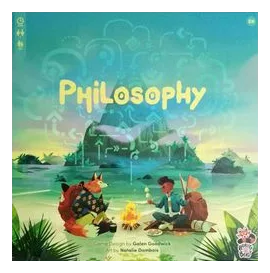
Philosophy is a relaxing, abstract two-player game. In it, you and your fellow player are two friends having a conversation.
Core mechanisms
Key systems that shape the decisions players make.
Read the full game description
Philosophy is a relaxing, abstract two-player game. In it, you and your fellow player are two friends having a conversation. The board represents your conversation space, and your pieces represent your ideas. The goal of the game is simple: connect 3 of your ideas in a row anywhere on the board. This is called a Conclusion. You’ll take turns placing your ideas onto the board, with the restriction that new tiles may only be placed in the center nine squares. Each tile has a space that it will target with a unique effect. If placed correctly, a player's tiles can push or pull the opposing player's tiles. Moved tiles may also push neighboring tiles or even enter into the target space of the current player's previously placed tiles, triggering chain reactions. Tiles that are eventually pushed off of the board are returned to the player that owns them. The game ends when a single player has reached a Conclusion: three of their tiles connected in a line, horizontally, vertically or diagonally. Philosophy often feels more like a puzzle than a competitive game, as the board state grows in complexity and changes between turns. The calm theme, simple mechanics, difficult decisions, and premium production come together in a high quality experience for avid gamers and casual players alike.