Overview
At a glance
Is this game right for my group?
ABG editorial scores on a 1–5 scale.
Harder to teach
High replayability
Highly interactive
Scales well
Deep strategy
How it plays
How does it play?
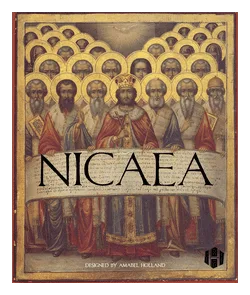
It's the year 325 and it's a pretty chill time to be a Christian. Not only has it been a hot minute since they were forced to renounce their faith on pain of death, but the emperor Constantine has really leaned into it, hoping it will unite the often fractured Roman Empire.
Core mechanisms
Key systems that shape the decisions players make.
Open Drafting
Select cards or items from a shared face-up display.
Hand Management
Time and sequence a limited hand of cards to preserve future options.
Stock Holding
Acquire shares whose value depends on companies, assets, or player actions.
Hidden Victory Points
Some scores remain concealed until a reveal or the end of the game.
Read the full game description
It's the year 325 and it's a pretty chill time to be a Christian. Not only has it been a hot minute since they were forced to renounce their faith on pain of death, but the emperor Constantine has really leaned into it, hoping it will unite the often fractured Roman Empire. So, the big guy isn’t super-thrilled when bishops immediately get into nit-picky, esoteric arguments that John Quintus Romanus doesn’t give two flips about. He demands that the bishops gather together in the city of Nicaea to come to an accord. He doesn’t really care what these nerds decide, so long as they decide something. This gathering is given irreverent treatment by Amabel Holland in this game for four, five, or six players. Like Constantine, it treats the theological positions argued at the first ecumenical council as fungible. Whether a position ends up accepted orthodoxy or damnable heresy has nothing to do with theology and everything to do with politics - with personal ambition, petty rivalries, and social dynamics. This is a sort of shared incentives game, in which each player commits to one of two sides in various theological disputes; guess which one the majority will go with and you’ll score points. Score the most points, and you’ll win the game. Unless the player with the fewest points has accumulated the most political influence. That player is powerful enough to splinter the church, provoking a schism and stealing the win. To prevent this, you’ll need to make sure that someone that powerful isn’t left out in the cold during the final settlement. At once a slick tableau-building game and a study in emergent alliances, Nicaea gives a rude but affectionate raspberry to what was perhaps the most pivotal event in the history of the early church.