Overview
At a glance
Is this game right for my group?
ABG editorial scores on a 1–5 scale.
Harder to teach
High replayability
Highly interactive
Scales well
Deep strategy
How it plays
How does it play?
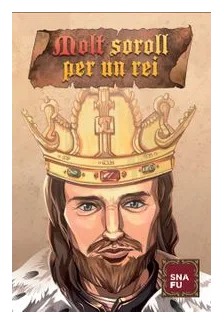
Molt soroll per un rei (Much ado about a king) is a solitaire game on the reign of Peter the Great of Aragon (1276-1285), based on the States of Siege system by Darin a. Leviloff.
Core mechanisms
Key systems that shape the decisions players make.
Read the full game description
Molt soroll per un rei (Much ado about a king) is a solitaire game on the reign of Peter the Great of Aragon (1276-1285), based on the States of Siege system by Darin a. Leviloff. The player, like Peter the Great, has to face many threats during his/her reign: the jumpy Catalan and Aragonese nobilities, the Andalusian revolts and, after the Sicilian Vespers, he must assert his dominance in Sicily and Naples against Charles of Anjou and defeat the crusade against the Crown proclaimed by the pope Martin IV and launched by Phillip III of France. Each turn a card is drawn, indicating how many of the threats are activated that turn (i. e. how many threats advance towards Barcelona). The card also shows how many actions has the player available. With this actions the player can try, among other things, to move back some threats, improve the stance of the nobility or improve the relationship with the papacy. If the player draws the last card of the deck, she wins; otherwise, if at any time an enemy threat enters Barcelona, she loses. —description from publisher