Overview
At a glance
Is this game right for my group?
ABG editorial scores on a 1–5 scale.
Harder to teach
High replayability
Highly interactive
Scales well
Deep strategy
How it plays
How does it play?
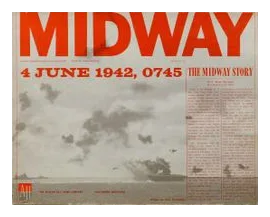
The basic idea is each player has his or her own map of the area (in this case the Midway Island) behind a screen. Each player "searches" for the enemy fleet by flying search planes to the various zones on the map and calling the zone co-ordinates.
Core mechanisms
Key systems that shape the decisions players make.
Grid Movement
Move pieces between adjacent spaces on a regular grid.
Hidden Movement
One or more pieces move secretly while opponents infer their locations.
Dice Rolling
Roll dice to introduce uncertainty into actions, production, movement, or resolution.
Movement Points
Spend a movement allowance across spaces with different costs.
Minimap Resolution
Resolve broader movement or conflict on a smaller linked representation of the map.
Read the full game description
The basic idea is each player has his or her own map of the area (in this case the Midway Island) behind a screen. Each player "searches" for the enemy fleet by flying search planes to the various zones on the map and calling the zone co-ordinates. Once found, bombers can be sent in to sink the enemy fleet. The actual attack is fought on a separate battle board where the ships are first placed on a rectangular grid and the attacking planes are placed in adjacent rectangles or on top of the ships themselves to indicate which ship they are attacking. The basic game is very simple, but there are a number of additional rules which add realism and complexity: CAP fighters, surface actions, anvil and wave attacks, etc. The game is superior with a neutral referee for true double blind play. Developed with the technical aid of C. Wade McClusky, Rear Admiral U.S.N. (Ret.) Avalon Hill Complexity Rating: 3