Overview
At a glance
Is this game right for my group?
ABG editorial scores on a 1–5 scale.
Harder to teach
High replayability
Highly interactive
Scales well
Deep strategy
How it plays
How does it play?
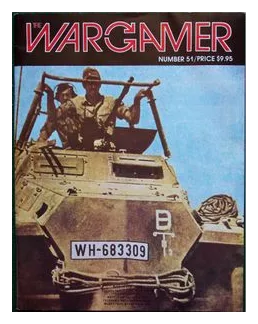
"Duel in the Desert: Rommel's Campaign in North Africa" is a strategic/operational level wargame, first published in The Wargamer Magazine (#51), a double-blind simulation of Rommel's campaigns in North Africa during 1941 and 1942.
Core mechanisms
Key systems that shape the decisions players make.
Grid Movement
Move pieces between adjacent spaces on a regular grid.
Dice Rolling
Roll dice to introduce uncertainty into actions, production, movement, or resolution.
Hidden Movement
One or more pieces move secretly while opponents infer their locations.
Movement Points
Spend a movement allowance across spaces with different costs.
Hexagon Grid
Use a hexagonal map where each space connects evenly in six directions.
Read the full game description
"Duel in the Desert: Rommel's Campaign in North Africa" is a strategic/operational level wargame, first published in The Wargamer Magazine (#51), a double-blind simulation of Rommel's campaigns in North Africa during 1941 and 1942. Neither player can see the map or units of his opponent. The game begins with Rommel's breakout into Cyrenaica in 1941 and continues until either the Allied Torch landings in Nov. 1942 or one side gains a decisive victory. Movement is handled as in some naval games... by calling out hex numbers of the paths each unit travels. When an enemy is spotted, a marker is placed to indicate location, but not strength. A unit is revealed only when it ends its turn adjacent to an enemy unit. Control of El Aghiela, Tobruk, and Alexandria determine the level of victory. From the rules, 1.0 Introduction (p. 20): "... Any simulation game must be a compromise between accuracy of simulation and simplicity of play. This game emphasizes limited intelligence, supply, and maneuver. It is also designed to be fairly simple to play. As a result, historical accuracy in other areas may not seem as great. A complete accurate simulation would be a much larger game." Scale: 30 km per hex Time: 1 month per turn Counters: Some counters represent more than one (similar) historical unit over time Zone of Control: Yes Stacking: Yes (generally 5 brigades) Supply: Yes (line, source, net; supply units) Combat: CRT (Combat Results Table) Intelligence: Yes (ULTRA rules for allies, "Intelligence Reports" scheduled for both sides) Initiative: die roll (1-4 Axis, 5-6 Allied) Special Rules: Tripoli off-map box, Rommel leader benefits Optional Rules: British Armor Coordination, Tobruck Minefields, Alexandria Garrison, Disbanded Formations Tables & Charts: CRT, Column Shift SUmmary, Die Roll Modifiers; Reinforcement/Supply/Intelligence schedule Tracking Sheet form: Armor/Infantry replacement points, Intelligence notes or guesses. Counter Manifest: Yes except enemy unit indicators