Overview
At a glance
Is this game right for my group?
ABG editorial scores on a 1–5 scale.
Harder to teach
High replayability
Highly interactive
Scales well
Deep strategy
How it plays
How does it play?
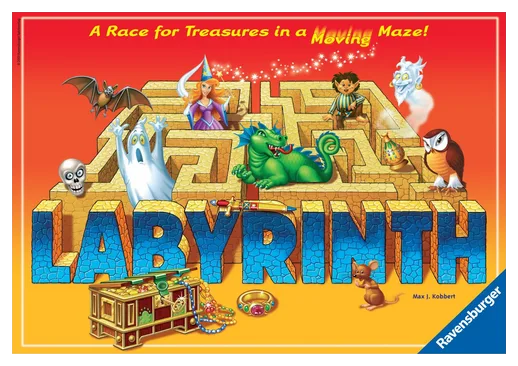
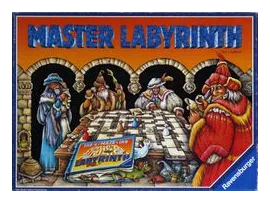
This earlier Master Labyrinth is very different than the 2007 dragon-themed Master Labyrinth. Part of the Ravensburger Labyrinth Games series, this game is based on the simpler, original Labyrinth game.
Core mechanisms
Key systems that shape the decisions players make.
Read the full game description
This earlier Master Labyrinth is very different than the 2007 dragon-themed Master Labyrinth. Part of the Ravensburger Labyrinth Games series, this game is based on the simpler, original Labyrinth game. It is played on a board with maze tiles (straight, L, and T shaped corridors) randomly arranged on it. Players are represented on the board by little wizard pawns. Players are wizards-in-training, and they are charged with exploring the maze and finding all the ingredients (numbered chips) needed to become a Wizard. The trick is that chips must be claimed in numerical order. Perhaps the most novel aspect of this game is that players mutate the maze by sliding a tile onto the board from the side, which hopefully will enable them to travel to the next ingredient. Once all twenty-one items have been claimed, the highest total score wins, but each player also holds a secret recipe worth bonus points if they were able to capture three specific ingredients.