Overview
At a glance
Is this game right for my group?
ABG editorial scores on a 1–5 scale.
Harder to teach
High replayability
Highly interactive
Scales well
Deep strategy
How it plays
How does it play?
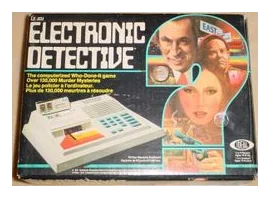
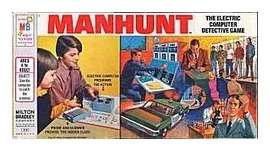
Game features a "crime computer" that is used for movement and to determine other game functions. Players become detectives and work alone or with a partner and choose a murder, robbery, or swindle investigation.
Core mechanisms
Key systems that shape the decisions players make.
Paper-and-Pencil
Record choices and results directly on a personal sheet.
Race
Compete to reach a destination, threshold, or objective before opponents.
Deduction
Combine clues and exclusions to identify hidden information.
Roll-and-Move
Roll dice or spin a dial to determine how far a piece moves.
Take That
Direct negative effects at selected opponents.
Read the full game description
Game features a "crime computer" that is used for movement and to determine other game functions. Players become detectives and work alone or with a partner and choose a murder, robbery, or swindle investigation. Players visit crime scenes and gather evidence. 16 scanner cards are shuffled and one is selected at random and inserted into the Clue Scanner. This provides the clues that the detectives will need to solve the crime. Each player is provided with a detectives handbook to record clues and a readout book that lists known suspects for the different types of crimes. Clues can be obtained by visiting the crime scene, talking to witnesses, stakeouts, and at the crime lab. Suspects are eliminated by looking at behavior patterns consistent with that criminals past crime record. Clues can be taken from other detectives, but at the risk of giving up other clues as well. The first detective to identify the correct culprit wins. A fun game but a little dated by todays technology.