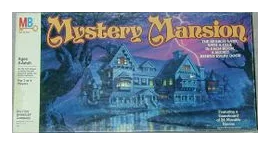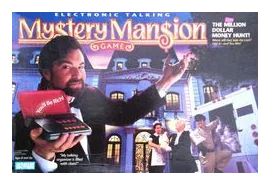
Table feel
The game has a moderate level of direct confrontation and strategic depth. Players need to pay attention to each other's actions frequently. However, there is not much emphasis on cooperation.
While this may have intended to be just an electronic update of the earlier Milton Bradley game, Electronic Talking Mystery Mansion ends up being a very different game. Instead of a modular board, the board is fixed but the content of the rooms is variable. Gone is the need to co...
Players
2-4
Time
?-?
Age
8+
Weight
1.4
Rating
6.40
Should this hit the table?
The game has a moderate level of direct confrontation and strategic depth. Players need to pay attention to each other's actions frequently. However, there is not much emphasis on cooperation.
Teaching signal
High replayability
Highly interactive
Scales well
Deep strategy
Luck-sensitive
The game has a moderate level of direct confrontation and strategic depth. Players need to pay attention to each other's actions frequently. However, there is not much emphasis on cooperation.
The Electronic Talking Mystery Mansion has a high variability gameboard, offering different experiences each time it is played. The presence of expansions adds new content and gameplay elements, increasing replay value. The game also provides deep strategic possibilities and allows players to improve their strategies over time. The player interaction score is average. The game scales well with different numbers of players without compromising its appeal or balance. While it may take some time to learn, the game offers a good balance between easiness and depth. Overall, the game has a strong replayability score of 7.8 out of 10.
The final luck score for Electronic Talking Mystery Mansion is 5, indicating a balanced mix of luck and strategy. The game outcome is influenced by random elements such as dice rolls or card draws, but players also have substantial ability to mitigate the effects of randomness through strategic decisions and planning. Overall, luck plays a significant role in the game, but player strategy and decisions also have a notable impact.
Overview
While this may have intended to be just an electronic update of the earlier Milton Bradley game, Electronic Talking Mystery Mansion ends up being a very different game. Instead of a modular board, the board is fixed but the content of the rooms is variable. Gone is the need to collect the right Search cards. Instead players can search any item they like. The electronic organizer tells the players what clues they find. Some information is given to everyone, other information is just given to the active player. Players deduce the location of the money based on the clues they find, and have to collect the correct clue cards (one item, one person) out of the 12 possible in order to obtain the money and win the game. The changes from the earlier board game: no search cards, no chests to drag out of the house, fewer hiding spots, and fewer clue cards, makes this version play much quicker and feel quite a bit lighter.
Media
Images, galleries, and videos are grouped here so the page feels visual before every asset is fully hosted.
No media imported yet.
Editions
| Edition | Year | Language | Publisher / Region |
|---|---|---|---|
| No editions imported yet. | |||
Files and documents
No files imported yet.
Commerce mapping
Credits
Linked items
Related games and expansions help build a connected catalog around every title.
No linked items imported yet.