Overview
At a glance
Is this game right for my group?
ABG editorial scores on a 1–5 scale.
Harder to teach
High replayability
Low interaction
Scales well
Deep strategy
How it plays
How does it play?
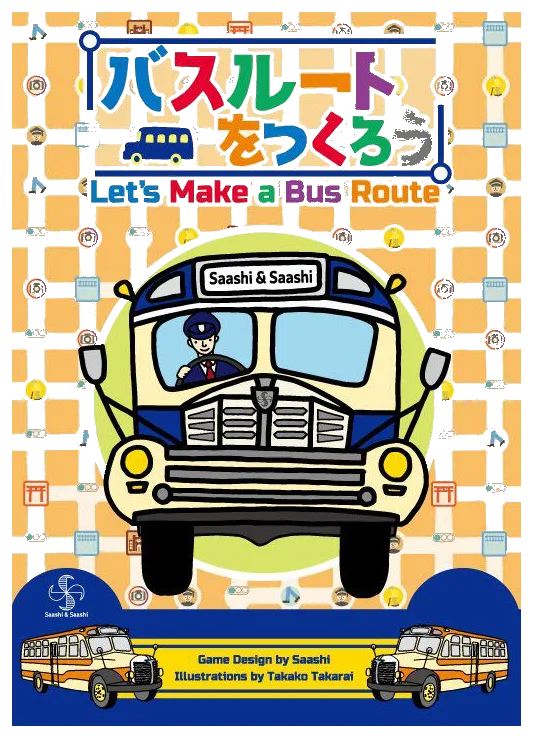
In Let's Make a Bus Route (??????????), you and others each control a bus company in Kyoto and are creating new bus lines to respond to the needs of local students, the elderly, and tourists and commuters visiting the city, while also trying to avoid traffic jams.
Core mechanisms
Key systems that shape the decisions players make.
Line Drawing
Draw lines to connect, divide, trace, or claim parts of the play area.
Network and Route Building
Create connected routes that improve reach, delivery, control, or scoring.
Set Collection
Gather related items that become more valuable when scored together.
Bingo
Mark matching results on a personal grid and complete required patterns.
Paper-and-Pencil
Record choices and results directly on a personal sheet.
Read the full game description
In Let's Make a Bus Route (??????????), you and others each control a bus company in Kyoto and are creating new bus lines to respond to the needs of local students, the elderly, and tourists and commuters visiting the city, while also trying to avoid traffic jams. Can you bring people by sightseeing spots while also getting them to their destinations? Which lines will be most pleasing to users? The game includes a large shared map board, along with five individual player boards. All players draw their routes on the shared board, while taking note of their passengers, sights, and other elements on their individual boards. To start a round, you reveal a colored bus route at random from the deck. Each player's board has a different combination of colors and required moves, so blue on one board might be go straight one block, while someone else goes two blocks and a third player must make a turn. Players make their moves in turn on the shared map board, then mark the icons of what they've seen at various intersections on their player board. Different types of riders all score differently, and placing checks on your personal board for passengers and areas (sight-seeing spots, stations, universities) before other players do can earn you extra bonus points, so strategically planning your route while keeping in mind your main destinations is very important. Sharing the road with someone else causes traffic, which might lead to penalties. Meet the conditions on public demand cards to score bonus points!