Overview
At a glance
Is this game right for my group?
ABG editorial scores on a 1–5 scale.
Harder to teach
High replayability
Highly interactive
Scales well
Deep strategy
How it plays
How does it play?
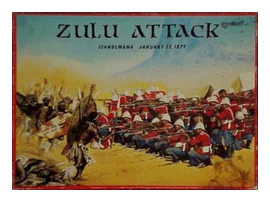
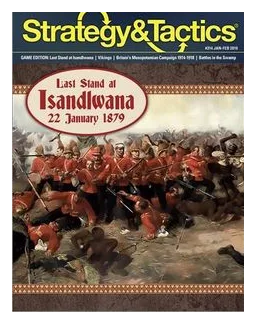
Last Stand at Isandlwana, 22 January 1879 is a two-player tactical wargame of low-intermediate complexity simulating the last 90 to 240 minutes of that infamous and legendary battle of the Anglo-Zulu War.
Core mechanisms
Key systems that shape the decisions players make.
Grid Movement
Move pieces between adjacent spaces on a regular grid.
Dice Rolling
Roll dice to introduce uncertainty into actions, production, movement, or resolution.
Hexagon Grid
Use a hexagonal map where each space connects evenly in six directions.
Simulation
Model a real or imagined system through detailed cause-and-effect rules.
Read the full game description
Last Stand at Isandlwana, 22 January 1879 is a two-player tactical wargame of low-intermediate complexity simulating the last 90 to 240 minutes of that infamous and legendary battle of the Anglo-Zulu War. The Zulu player is on the offensive, attempting to wipe out the entire British force on the map as quickly as possible. The British is attempting to win by having some remnant hold out longer than occurred historically or, alternatively, by having some portion of his command escape off the map and get back to relative safety at Roarke’s drift. Solitaire-play is easily doable. Each game turn of Last Stand is equal to five to 20 minutes of “real time,” depending on the tempo of action in each turn. Each hexagon on the 22x34” map represents 217 yards (200 meters) from side to opposite side. There are 176 5/8” counters with each British unit-counter representing a company or a “detachment” of infantry. On the Zulu side, they individual units each represent temporary battlefield agglomerations of the about 100 to 200 warriors. Magazine: Strategy & Tactics #314