Overview
At a glance
Is this game right for my group?
ABG editorial scores on a 1–5 scale.
Harder to teach
High replayability
Highly interactive
Scales well
Deep strategy
How it plays
How does it play?
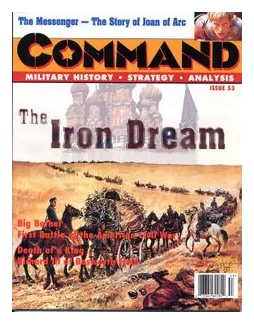
Iron Dream is a two-player Strategic level treatment of World War II's Eastern Front in 1941-42.
Core mechanisms
Key systems that shape the decisions players make.
Dice Rolling
Roll dice to introduce uncertainty into actions, production, movement, or resolution.
Combat Results Table
Compare opposing strength as a ratio, then consult a table to resolve combat.
Hexagon Grid
Use a hexagonal map where each space connects evenly in six directions.
Zone of Control
Restrict or influence movement through areas controlled by nearby pieces.
Read the full game description
Iron Dream is a two-player Strategic level treatment of World War II's Eastern Front in 1941-42. Low-to-medium complexity, with the Axis player primarily on the offensive and the Soviet player primarily on the defensive, covering roughly the period starting with the launch of Operation Typhoon until the surrender of the German 6th Army at Stalingrad. First published in Command magazine #53. Republished in Command Magazine Japan #99 in 2011.