Overview
At a glance
Is this game right for my group?
ABG editorial scores on a 1–5 scale.
Harder to teach
High replayability
Highly interactive
Scales well
Deep strategy
How it plays
How does it play?
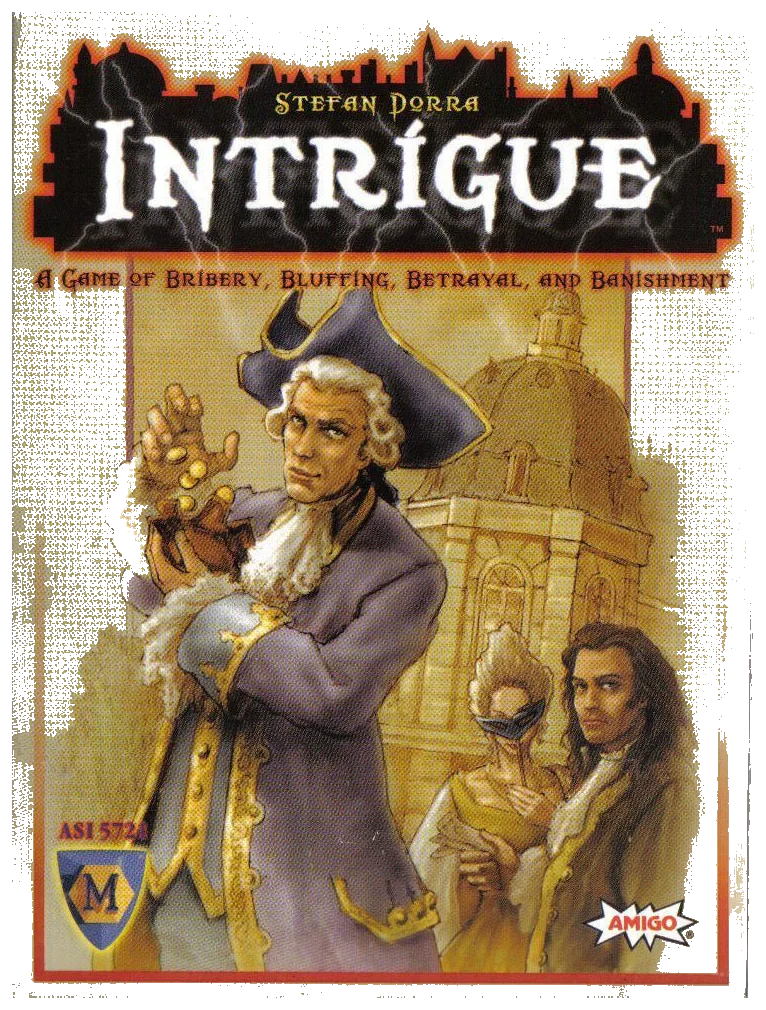
This pure negotiation game pits the players as Renaissance era families that are engaging in rampant nepotism. Players are seeking positions in the other families' businesses, and to further that pursuit players offer bribes.
Core mechanisms
Key systems that shape the decisions players make.
Area Majority
Compete to have the strongest presence in areas that award control or points.
Auction/Bidding
Bid against other players to determine who receives an item, action, or priority.
Hand Management
Time and sequence a limited hand of cards to preserve future options.
Negotiation
Make proposals, promises, or deals directly with other players.
Bribery
Offer resources or incentives to influence another player’s decision.
Read the full game description
This pure negotiation game pits the players as Renaissance era families that are engaging in rampant nepotism. Players are seeking positions in the other families' businesses, and to further that pursuit players offer bribes. However, once accepting a bribe, the 'bought' player is under absolutely no obligation to honor the highest briber or any other verbal deal. In a word, this game is vicious. The new AMIGO edition came out in 2005. The main difference between the F.X. Schmid and the AMIGO versions are that the the F.X. Schmid version uses five houses/buildings per player, with values of 1,2,3,5, and 10, but the AMIGO version uses four buildings/houses per player, with values of 1,3,6, and 10. Accordingly, the F.X. Schmid version has five professions - knight, merchant, lawyer, writer, and clergy - but the AMIGO version retains only clergy and writer, and adds chemist and doctor.