ABG All Board Games
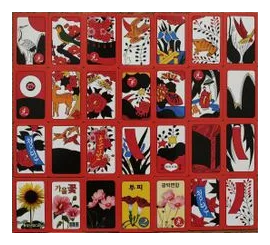
Hanafuda box art

Hanafuda

Players

2-7

Time

?-?

Age

8+

Weight

1.71

Rating

6.84

Fit

Teach 2.4

Teaching signal

Replay 4.1

High replayability

Interaction 3.8

Highly interactive

Scaling 4.4

Scales well

Strategy 4.7

Deep strategy

Control 3.5

More strategic control

Table feel

Hanafuda has a moderate level of direct confrontation and strategic confrontation. Players need to be aware of and react to others' strategies frequently. However, there is less emphasis on cooperation in the game. Overall, the interaction score for Hanafuda is 7.6, indicating a good balance of player interaction.

Replay value

Hanafuda offers a high level of variability with its gameboard, allowing for different experiences each time it is played. The presence of expansions adds to the replay value, providing new content and gameplay elements. The game also offers deep strategic possibilities, allowing players to improve their strategy over time. The player interaction score is average, and the game scales well with different numbers of players. While it may take some time to learn, the easiness to learn score is moderate. Overall, Hanafuda has a strong replayability score of 8.15.

Luck profile

Hanafuda has a moderate level of luck involved in the game. The randomness impact is rated at 6, indicating that random elements have a notable but not exclusive impact on the game outcome. Players have some ability to influence or mitigate the effects of randomness through strategic decisions, as indicated by a strategic mitigation rating of 8. The overall luck dependence is rated at 7, suggesting a balanced mix of luck and strategy. The final luck score for Hanafuda is 7, indicating that luck plays a moderate role in the game, but player strategy and decisions also have a significant influence on the outcome.

Overview

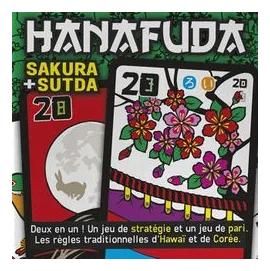
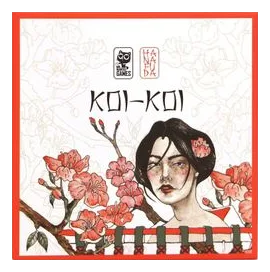
Hanafuda cards originated in beginning of 18th-century Japan. Legend says stewards of Edo Shogunate created it from Portuguese playing cards. A deck consists of forty-eight cards divided into twelve suits of four cards each. Each suit represents one of the twelve months of the year or individual plants (almost all flowers). The cards are small (about 1 x 2 inches), made from stiff cardboard, and are beautifully illustrated. Many different games can be played with a Hanafuda deck. The standard game was Hachi-Hachi (Eighty-eight), which resembles the Western game Casino, but is more complicated and subtle. The standard game now is Koi-Koi. Re-implemented by: Go Stop, the game using Hwatu (??, ??), Korean Hanafuda.
Editions

Edition Year Language Publisher / Region
No editions imported yet.

Files

No files imported yet.

Credits

Designers

1
(Uncredited)

Artists

4
Pascal Boucher Kelsey Lynn Cretcher Vincent Dutrait Antonietta Fazio-Johnson

Publishers

4
(Self-Published) Daiso (????) Editions Philippe Picquier Ensky

Linked items

No linked items imported yet.