Overview
At a glance
Is this game right for my group?
ABG editorial scores on a 1–5 scale.
Harder to teach
High replayability
Highly interactive
Scales well
Deep strategy
How it plays
How does it play?
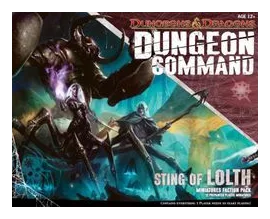
Dungeon Command: Sting of Lolth is a card-driven skirmish game played on modular interlocking map tiles that uses order cards, creature cards and miniatures.
Core mechanisms
Key systems that shape the decisions players make.
Action Points
Spend a limited allowance of points across several possible actions each turn.
Area Movement
Move pieces between connected regions rather than along individual spaces.
Hand Management
Time and sequence a limited hand of cards to preserve future options.
Campaign Card Play
Play cards to command conflicts and carry consequences through a campaign.
Read the full game description
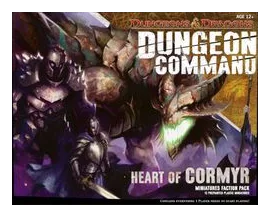
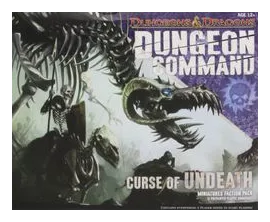
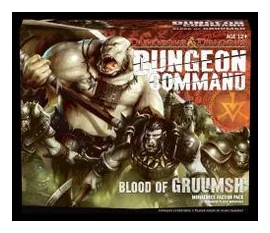
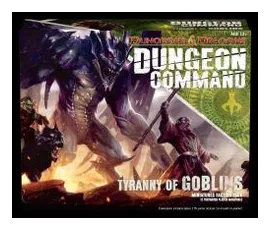
Dungeon Command: Sting of Lolth is a card-driven skirmish game played on modular interlocking map tiles that uses order cards, creature cards and miniatures. The object of the game is to have the highest remaining Morale when an opposing warband's Morale has been reduced to 0 or below, or if a player ends his or her turn with no creatures on the battlefield. As a player, you take on the role of a commander, sending a warband to battle the forces arrayed against you. You recruit troops and deploy them on the battlefield. You issue orders to those creatures, outfit them with spells and equipment, and direct their tactics to break the morale of your enemies and drive them from the field. Dungeon Command: Sting of Lolth includes twelve miniatures, such as an assassin, a priestess, a wizard, spiders, and drow house guards. While each Dungeon Command faction is meant to be played by a single player, quick-start rules allow two players to engage in a shortened version of the game using only one box. Dungeon Command is designed for two players, although up to four can play with a few adjustments explained under the advanced rules. Integrates with: Dungeon Command: Blood of Gruumsh Dungeon Command: Curse of Undeath Dungeon Command: Heart of Cormyr Dungeon Command: Tyranny of Goblins Can also integrate with: Dungeons & Dragons: Castle Ravenloft Board Game Dungeons & Dragons: The Legend of Drizzt Board Game Dungeons & Dragons: Wrath of Ashardalon Board Game Dungeons & Dragons: Temple of Elemental Evil Board Game