Overview
At a glance
Is this game right for my group?
ABG editorial scores on a 1–5 scale.
Harder to teach
High replayability
Highly interactive
Scales well
Deep strategy
How it plays
How does it play?
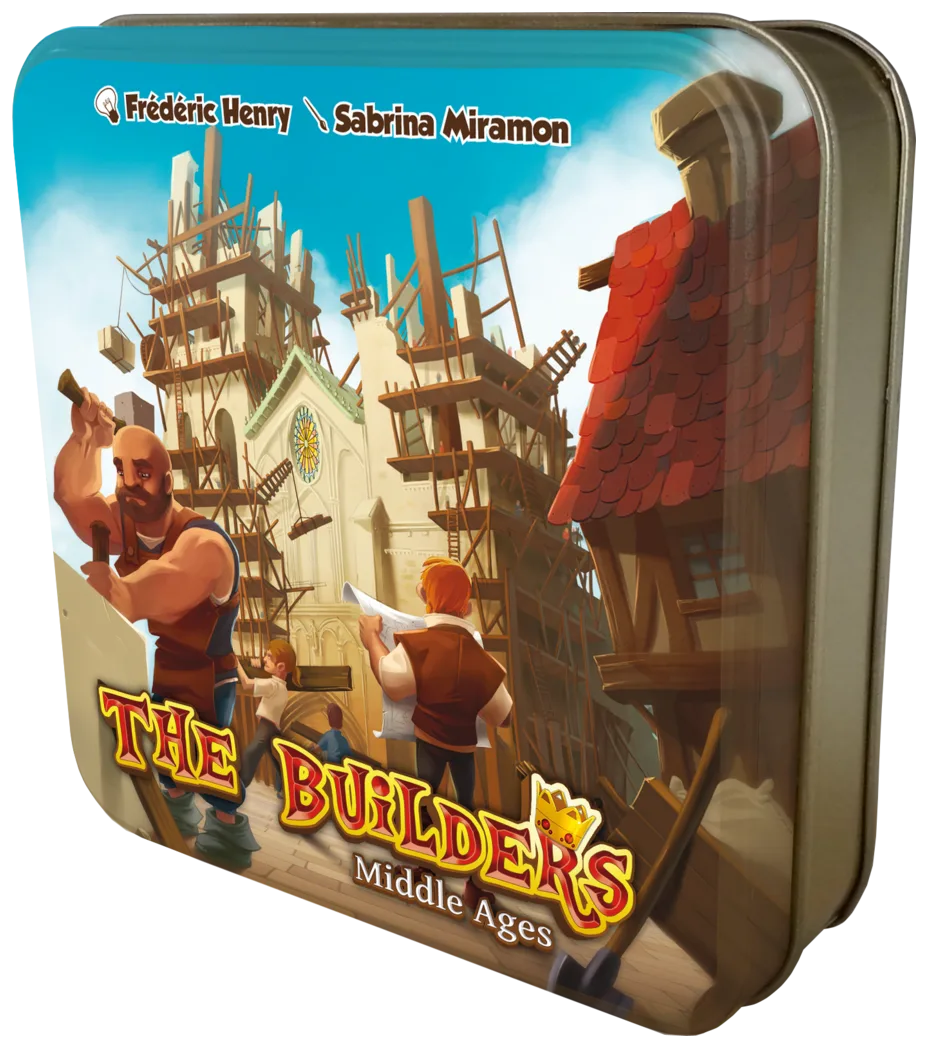
In The Builders: Middle Ages, the cards represent buildings or workers. Players score points (and gain money) by completing the construction of buildings, while placing a worker on a construction site costs money.
Core mechanisms
Key systems that shape the decisions players make.
Read the full game description
In The Builders: Middle Ages, the cards represent buildings or workers. Players score points (and gain money) by completing the construction of buildings, while placing a worker on a construction site costs money. Each building has four characteristics (carpentry, masonry, architecture, tilery) rated between 0 and 5, and the workers have the same characteristics valued in the same range. To complete a construction, the player must add enough workers to cover the four characteristics of the building. Each player starts the game with 10 ecu and an apprentice. Five workers and five buildings are placed face-up on the table, with the others set aside in separate decks. On a turn, you can take three free actions, then pay 5 ecu for each additional action. The possible actions are: Open a site - Take one of the five buildings, place it front of you, then draw a replacement from the deck. Recruit a worker - Take one of the five workers, place it front of you, then draw a replacement from the deck. Assign a worker to a building - Pay the cost of the worker (as he won't work for free!), then place him on a building; when the building's needs are met, you earn the points and coins indicated, then flip the building over. The workers return to your pool of available labor. Get money - Forgo one, two or three actions to earn 1, 3 or 6 ecu. Some completed buildings join your labor pool as they can be used to complete other buildings. As soon as a player reaches 17 points, players finish the round so that everyone has the same number of turns, then you tally points, with each completed card having a point value and each 10 ecu being worth 1 point. Whoever has the most points wins.