Overview
At a glance
Is this game right for my group?
ABG editorial scores on a 1–5 scale.
Harder to teach
High replayability
Highly interactive
Scales well
Deep strategy
How it plays
How does it play?
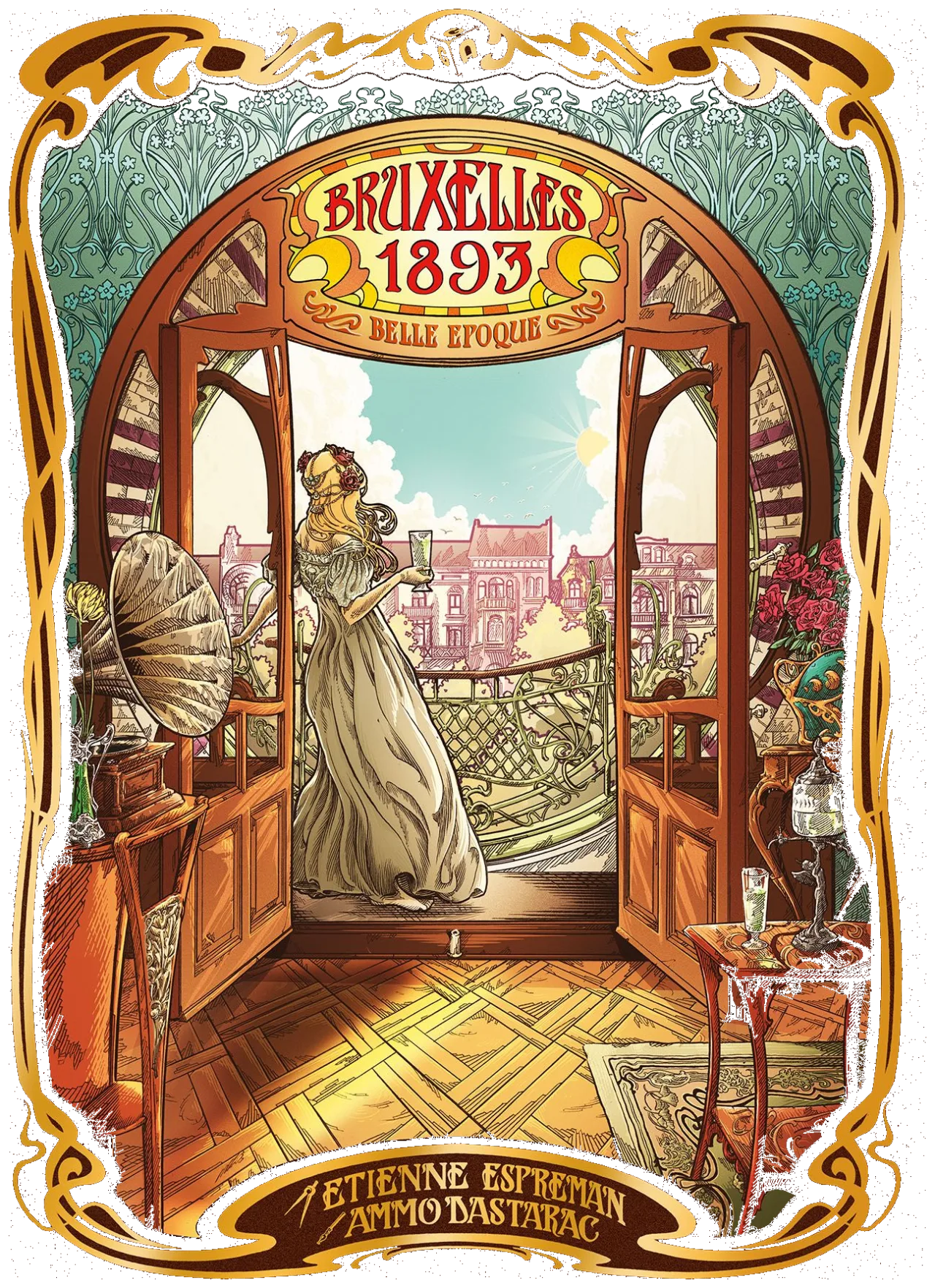
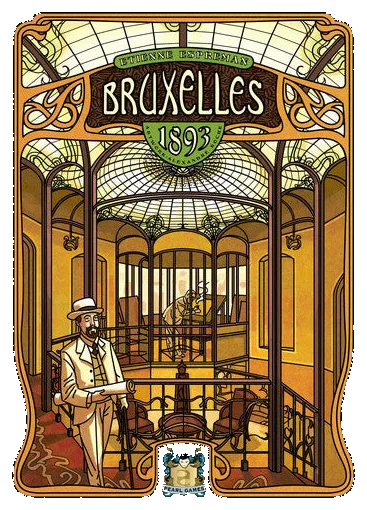
Bruxelles 1893 is a worker placement game with elements of bidding and majority control. Each player is an architect of the late 19th century and is trying to achieve, through various actions, an architectural work in the Art Nouveau style.
Core mechanisms
Key systems that shape the decisions players make.
Area Majority
Compete to have the strongest presence in areas that award control or points.
Auction/Bidding
Bid against other players to determine who receives an item, action, or priority.
Open Drafting
Select cards or items from a shared face-up display.
Worker Placement
Commit limited workers to action spaces before opponents occupy them.
Modular Board
Build the play area from interchangeable sections that vary between games.
Read the full game description
Bruxelles 1893 is a worker placement game with elements of bidding and majority control. Each player is an architect of the late 19th century and is trying to achieve, through various actions, an architectural work in the Art Nouveau style. The most successful building yields the most points. Each player can also create works of art to increase his score. The action board is modular, with not every player having access to each action each turn. Some actions cost money – acquiring high-quality materials, building a level of your personal house, finding a patron, creating a work of art, selling that art for money and prestige – while other actions are free but can potentially cause you to lose one of your workers; these latter actions include acquiring low-quality materials, activating your patrons, visiting the stock exchange, and taking one of the actions with a cost. Once everyone has passed on taking more actions, the round ends and players have an art exhibition during which they can sell works. After this, players receive prestige points or bonus cards based on the symbols they've placed their workers next to on the action board. After five rounds, the game ends and players score bonus points based on their architect level, their bonus cards, how well they've completed their work, and their money on hand. The player with the most points wins.