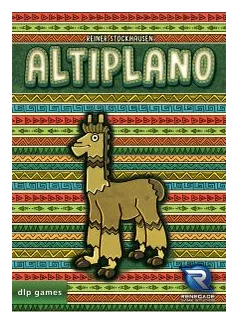
Overview
At a glance
Is this game right for my group?
ABG editorial scores on a 1–5 scale.
Harder to teach
High replayability
Highly interactive
Scales well
Deep strategy
How it plays
How does it play?
Altiplano is a bag-building game along the lines of Orléans, set in the South American highlands of the Andes (the "Altiplano").
Core mechanisms
Key systems that shape the decisions players make.
Action Points
Spend a limited allowance of points across several possible actions each turn.
Contracts
Complete specific requirements to earn rewards, income, or victory points.
Deck / Bag Building
Add new pieces during play to improve the cards, tokens, or dice drawn later.
Open Drafting
Select cards or items from a shared face-up display.
Modular Board
Build the play area from interchangeable sections that vary between games.
Read the full game description
Altiplano is a bag-building game along the lines of Orléans, set in the South American highlands of the Andes (the "Altiplano"). The competition for limited resources is considerable, as it was in Orléans, but the greater focus in Altiplano is on building up your own production to be the best that it can be - or at least better than that of the other players! The object of the game is for players to use their goods to produce more goods that will be worth points in the end. Each player starts with a unique role tile, giving them access to different goods and methods of production. Players have limited access to production at the start, but they can acquire additional production sites during the game that open up new options. The various types of goods — such as fish, alpaca, cacao, silver and corn — all have their own characteristics and places where they can be used. For example, silver can be sold for a high price at the market, fish can be exchanged for other goods at the harbor and alpaca can produce wool at the farm that can then be made into cloth. Aside from building up an effective production, players must fulfill their orders at the right time, develop the road in good time and store their goods cleverly enough to fill their warehouses in the most valuable way. Often, a good warehouse keeper is more relevant in the end than the best producer.